
The battle for Royal Mail
[ad_1]
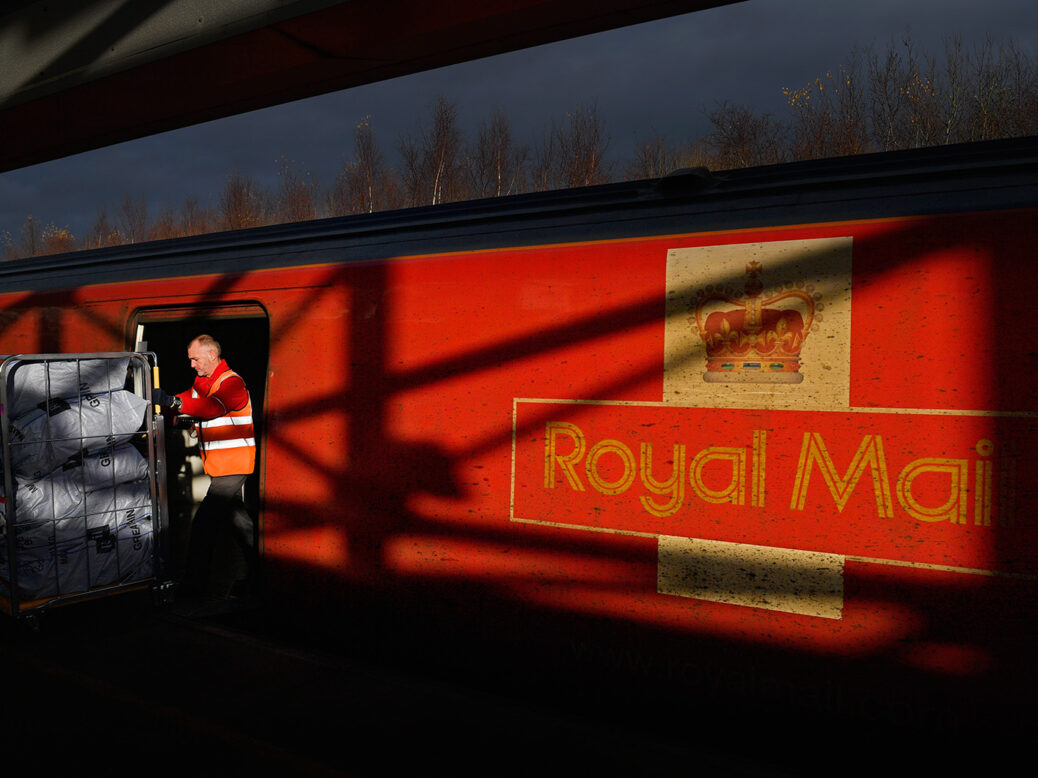
It began with a ballot, and three years later, it ends with another. “History repeats itself: first as tragedy, then as farce,” Karl Marx warned. The CWU’s votes have borne both – thunderous defiance in 2022, weary compromise in 2025. That summer, Royal Mail workers delivered a thunderclap: a 98.7 per cent strike mandate on a 72 per cent turnout. In August, they voted again – this time to settle – backing a three-year deal under foreign ownership. Royal Mail workers vote 79.5 per cent “yes” on a meagre 43.5 per cent turnout.
A workforce driven to strike in the harshest cost-of-living crisis in 40 years; a company sinking into losses even as its global arm flourished; a government that first privatised a public service, then sold it abroad; and a union fighting not only for wages, but for the survival of one of the nation’s last universal services. As the TUC conference winds up in Brighton today (10 September) amid anxieties that the Government will drop its commitments to workers’ rights, in this three-year episode in the long history of Royal Mail we can find all the industrial injustice that has marked recent British history.
The spring of 2022 was the breaking point. Platinum Jubilee bunting fluttered, but beneath it inflation soared; energy bills spiked, and groceries rose by the week. The pandemic had left workplaces fatigued and fractured. Inside sorting offices, staff faced job cuts, longer rounds, and the intrusive scanners that tracked their every pause. Royal Mail’s new handheld devices promised “efficiency” but delivered only exhaustion, cuts, and control. It was the cost-of-living crisis that pushed those pressures to breaking point – not idleness.
By June, the Communication Workers Union had balloted its members. The response was emphatic: near-unanimous support for strike action. By late summer, picket lines stood outside depots across the country. These strikes were never only about missed deliveries; they were about who should bear the costs of a system where profits were privatised and wages left behind. On the doorsteps, the once-cheerful figure of the postie now carried something else entirely: fatigue, frustration, defiance.
The strikes were timed with precision. October hit the early Christmas retail rush; November caught Black Friday and Cyber Monday; December, the sacred postal season itself. Parcels piled into mountains. Executives spoke of “irreparable damage”. The union replied that the damage had long since been done – by years of short-termism and shareholder payouts. The dispute was part of a wider national reckoning. Trains stood idle, classrooms closed, hospital staff walked out: Britain itself seemed stalled, caught between a pandemic hangover and global upheaval. Russia’s invasion of Ukraine sent energy prices soaring; floods drowned Pakistan; Europe baked in record heat. The strikes at Royal Mail were no outlier but one thread in a wider fabric of dislocation, where the costs of crisis fell heaviest on workers.
By mid-2023, both sides were bloodied. Royal Mail was sinking into steep losses; postal workers into weeks of lost wages, cancelled holidays, sudden arrears. The eventual deal – a 10 per cent rise and a £500 lump sum – passed with 76 per cent support. It brought relief, but no celebration. The longest, bitterest industrial dispute in Royal Mail’s modern history ended not in victory, but in compromise. But the struggle had never been about just pay. Even as workers picketed, the company was being remade. In July 2022, Royal Mail plc quietly rebranded as International Distribution Services – a move widely read as the prelude to splitting off its jewel, the profitable parcels arm GLS, from its burden, the loss-making UK postal service.
By 2024, rumour turned to fact. Czech billionaire Daniel Křetínský’s EP Group tabled a £3.6 billion bid for IDS. His assurances were carefully worded: the Royal Mail name would endure, headquarters and taxes would stay in Britain, the universal service obligation would stand. By December, the deal had government approval. For the first time in five centuries, Royal Mail passed into foreign hands. A golden share offered token safeguards, but the symbolism was blunt: a pillar of Britain’s civic life was no longer British.

Subscribe to The New Statesman today from only £8.99 per month
For the CWU, the takeover raised the stakes. General secretary Dave Ward – a union man to his core, and, to the puzzlement of some hardliners, a newly minted CBE – was thrust into the role of strategist. He won commitments rare in today’s industrial relations: monthly advisory committees with management; 10 per cent of future dividends channelled into an employee trust; tighter limits on agency labour; and a pledge to keep GLS tied to Royal Mail for at least three years. Ward hailed the deal as “the strongest platform the union has ever had”. His vision was overtly civic: a Royal Mail that delivered NHS prescriptions, invested its employee trust in local projects, and served communities before shareholders. Renationalisation, though still distant, remained the CWU’s horizon. Yet some began to wonder about Ward’s growing closeness to the “Czech Sphinx” himself, Daniel Křetínský.
This summer’s ballot on the “Rebuilding Royal Mail” deal revealed both achievement and fatigue. Nearly four to one backed the three-year settlement: a 4.2 per cent rise in 2025, backdated to April, and at least two per cent in 2026 and 2027, tied to inflation. The agreement also pledged to cut agency labour and improve redundancy terms. Yet turnout told its own story: just 43.5 per cent, a stark contrast with 2022, and evidence of a workforce weary from years of dispute and harder to mobilise. Not to mention the estimated 32 per cent of Royal Mail workers who are not CWU members.
But beneath the surface of that vote, tensions remain raw. An internal CWU circular dated 27 August 2025, signed by Dave Ward and deputy Martin Walsh, accuses Royal Mail’s management of failing to honour the new “Rebuilding Royal Mail” deal. In pressing the charge, Ward risks putting his members’ hard-won settlement in jeopardy. Ward’s battle against management has arguably devolved into a personal crusade. One observer even told me: “Dave Ward’s forgotten he’s neither employer nor owner and that neither have to listen to his tired nonsense, which incidentally his members don’t understand or necessarily agree with.”
The circular laid down conditions before talks on reforming the universal service obligation could proceed: a plan to reset industrial relations, clear communication of the agreement at every level, and resolution of outstanding issues. The result is a last-minute stalemate, leaving thousands of postal workers in limbo despite voting weeks ago to end the dispute. For those who cast their ballots in good faith, long-awaited backdated bonuses are now frozen. To many, it feels like déjà vu: union leaders pulling levers in boardrooms while ordinary workers bear the cost. Supporters say Ward is holding management to account; critics that he is gambling with his members’ livelihoods, only weeks after they thought the conflict was over.
Yet EP Group has said nothing publicly. Its silence leaves Ward’s intervention exposed – and it is his members, more than half of whom never voted, who now shoulder the consequences. The episode underscores just how thin the truce really is. What was billed as a turning point already risks becoming another flashpoint if the promised cultural overhaul fails to materialise. Old fears of Křetínský as an asset-stripper have resurfaced. The Postal Workers Rank-and-File Committee has been especially vocal, calling the takeover – endorsed by CWU leaders and the Labour government – a façade for austerity and exploitation. They argue Křetínský is steering Royal Mail towards a low-cost, parcel-driven model of job cuts and “value extraction”, not investment in a universal service. For postal workers, the fight was never only about pay. It was about whether one of Britain’s last public goods could survive under private, and now foreign, ownership.
Supporters nonetheless hail the agreement as pragmatic: it secures pay stability, builds in structural safeguards, and gives the CWU a stronger voice under new ownership. Critics, however, still dismiss it as a retreat, arguing that the leverage of 2022 and 2023 has been traded away for modest gains. Both views point to the same dilemma: how to defend collective power in an industry where the logic of private ownership collides with the principle of universal service. This reaches far beyond postal workers and parcels. At its heart is the universal service obligation – daily delivery to every address at a flat rate – one of the last surviving pillars of the post-war social settlement. Today that duty rests inside a company owned elsewhere, beholden to shareholder returns and under relentless pressure to cut costs.
For Labour, which has resisted calls to renationalise Royal Mail, the dilemma is acute: defend universal services as part of Britain’s civic fabric, or leave them to the discipline of the market. For unions, the lesson is no less stark. Ballots can still win concessions, but sustaining mobilisation through years of attrition is far harder. Royal Mail’s truce may hold for now, but Ward’s decision has shown just how precarious it is – and how quickly workers’ sacrifices can be leveraged again. The settlement exposes the vulnerability of Britain’s basic infrastructure under private ownership. Postal workers have delivered their verdict. The larger question is whether Britain itself has the will to deliver in return.
[See also: Has Starmer lost faith in the Employment Rights Bill?]
Content from our partners
[ad_2]
Source link