The evolution of mail delivery systems
[ad_1]
The essence of mail delivery can be traced back as early as communication itself; human beings have been using various tools at their disposal to communicate over long distances long before the invention of paper or the telegraph. Visual codes like fire, smoke, were used to alert communities about danger in Mesopotamia, China and Native American Tribes.
As writing was invented, the mailing system started to advance in ancient Egypt. People used to carry royal decrees written on Papyrus scrolls or clay tablets to distant cities. In Ancient Rome, Persia, the Inca Empire, and India during the reign of Ashoka, mail used to be delivered by running on foot or at horseback, crossing rugged terrains and rivers. With the advent of paper in China in the 1st Century, record-keeping became easier and postal services became more organised. In the Islamic caliphate, organised postal networks were observed in the 7th–13th centuries. Paper spread to Europe via Islamic Spain and Italy. By the 10th-12th century, it was being mass-produced in Europe, paving the way for literacy, documentation and more organised postal systems. Mails were used to carry around the Church and Royal correspondence. Royal Mail was established under King Henry VIII in 1516, was later opened for public use. In the 16th century, Thurn and Taxis, a noble family of Germany, was credited with the start of the first public postal service in Europe.

Industrial Revolution and the advent of railways
The invention of the steam engine ushered in the dawn of the Industrial Revolution. Gradually, a more prominent phenomenon was observed, that people started to quit working in the farmlands and moved to burgeoning factories. The factories were also becoming efficient through a series of technological improvements. In the 1830s experimental railway mail service started between Liverpool and Manchester. There was also an improvement in trade and commerce. This surged a demand for faster mail and cheaper courier systems. In 1840, Rowland Hill started the Penny Post, allowing letters to be sent at a penny regardless of the distance and introducing the world’s first adhesive postage stamp, the ‘Penny Black’.
On the other hand, in the United States, the US Post Office was established in 1775, and Benjamin Franklin was appointed as the first Postmaster General by the Continental Congress. In the 1860s railway mail service was officially recognised in the US, introducing mail cars with clerks who sorted letters in transit. On October 9, 1874, the Universal Postal Service was established in Switzerland, under the Treaty of Bern. It standardised international mail exchange and regulations.
In India railway arrived in 1853, in Mumbai, mail also soon followed. In 1854, the Postal Act was introduced, standardising postal rates. The system rapidly covered the country. By the 20th century, India had an established postal system. On October 9, 1969 Universal Postal Union Congress held in Tokyo, Japan, agreed to observe the day as Global Post Day. Universal Postal Union is a UN-recognised body and has 192 member nations, enabling global communication and empowering people.
Modern Postal Systems
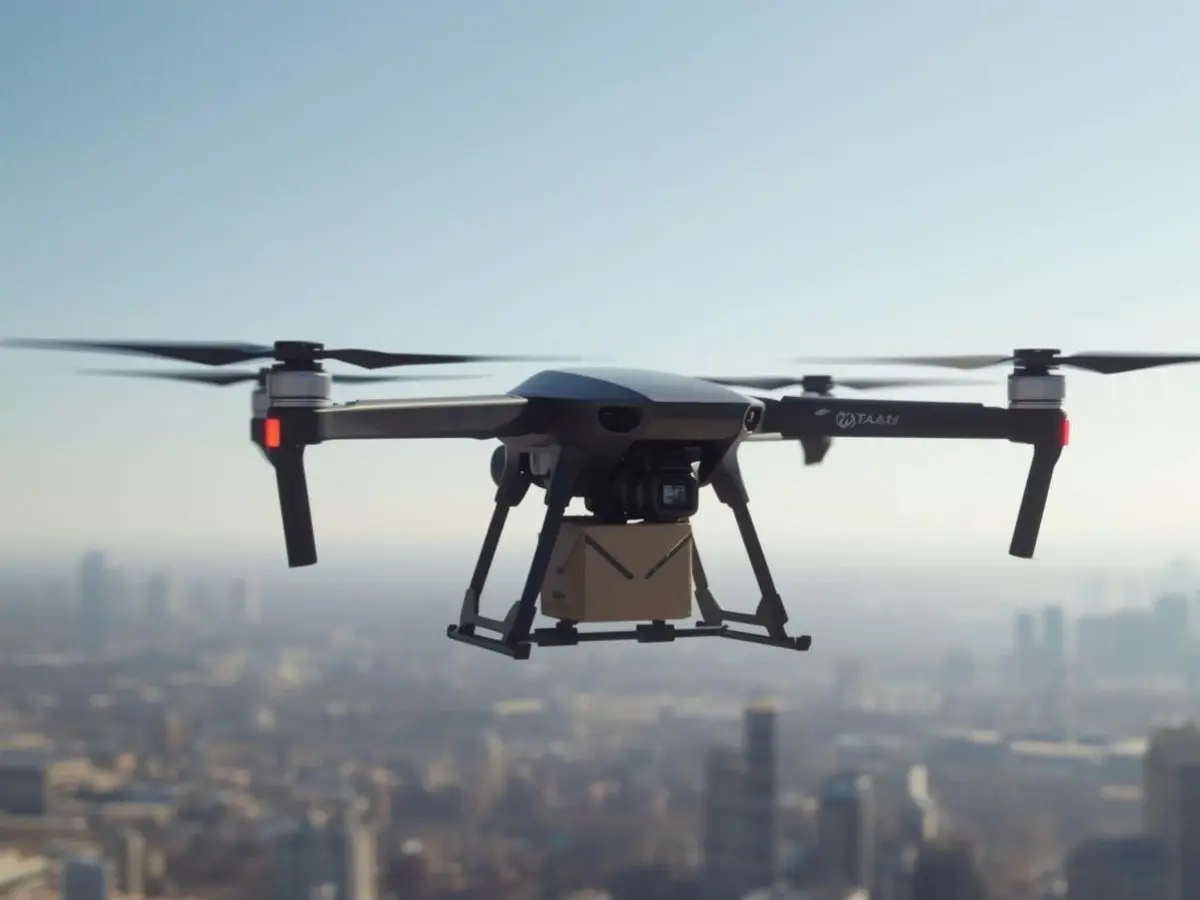
Early sightings of Postman were mostly via bicycle, and then it moved to a motorcycle. Now it is mostly delivered by vehicles. In 1900, Airmail was introduced, drastically reducing the delivery time. The United States Postal Service and Royal Mail UK use fully automated sorting hubs to process millions of items every day. Deutsche Post DHL uses AI robots for sorting parcels; it also has a drone delivery system for sending parcels to urban and some rural areas. Many other countries, like Switzerland, Australia, and the United States, are experimenting with drone delivery of parcels and essential medical services. In India, India Post has partnered with start-ups on several occasions to deliver parcels in remote hill stations. The latest one is collaborating with an IIT Madras-based startup called Amber Wings to deliver a 9.8 kg payload from Karjat to Matheran, a hill station in Maharashtra. reducing the delivery time by 1.5 hours.
In the era of digitalisation, postal services, instead of becoming redundant, have diversified in various shapes and forms. Automation, sorting machines, barcode scanning, drones and computerised tracking systems have all been gradually incorporated into the system to simplify and make the essence of mail service more efficient.
Related Stories
[ad_2]
Source link