CWU seeks to keep a lid on Royal Mail workers opposition to rotten deal with Kretinsky
[ad_1]
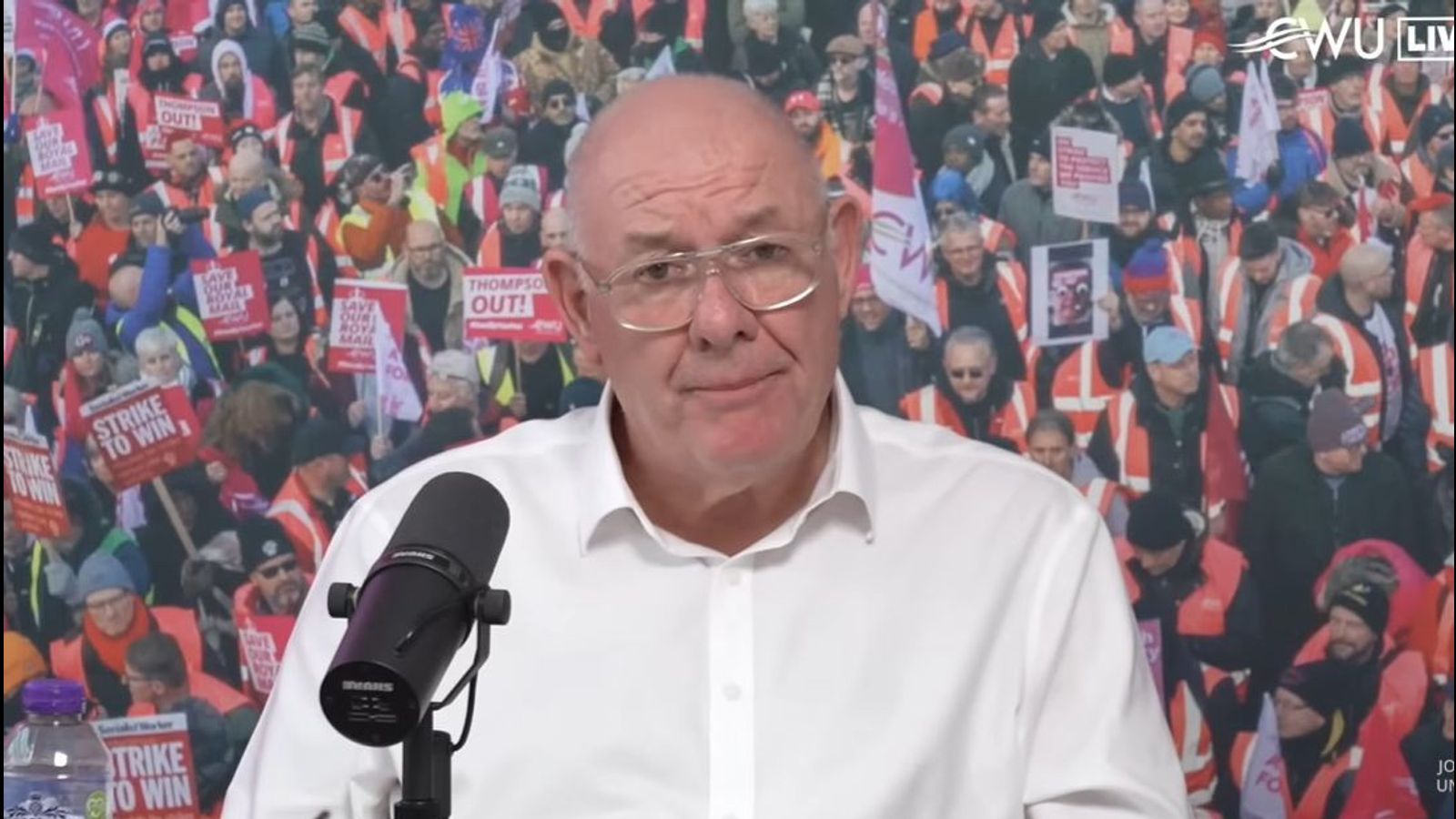
The Communication Workers Union’s (CWU) online meeting last Thursday—“Your Royal Mail questions answered with Dave Ward and Martin Walsh”—saw the union’s top officials hailing a so-called “reset” with Royal Mail’s new owner, billionaire Daniel Kretinsky’s EP Group, while trying to contain rank and file opposition to its dire consequences.
Chris Webb, CWU’s Head of Communications, set the tone for the stage-managed event, lecturing workers, “Let’s not have a thing where we get into each other”. He urged members to post “I’m with my union” in the chat, seeking to cast any criticism of Ward and Walsh as aiding the company.
This turns reality on its head. In August, the CWU postal executive pushed through a three-year below-RPI pay deal, binding workers to a Framework Agreement the CWU signed with EP Group last December. The centrepiece of the agreement was “USO reform”—corporate jargon for downgrading the mail service and introducing gig economy flexibility and increased workloads. Ward and Walsh agreed to a pilot scheme of the so-called Optimised Delivery Model (ODM) at 35 delivery units ahead of national deployment across 1,250 offices. The deal passed with support from just one in three members, yet Ward and Walsh declared this an “emphatic endorsement”.
The CWU held up worthless pledges that EP Group would address “outstanding issues”, including an “equalisation pathway” for new entrants on inferior pay terms and conditions. Predictably, Kretinsky reneged on the equalisation timeline, whose first step was due in September, insisting that nothing would be delivered unless the CWU agreed to full deployment of USO reform based on the blueprint established on the pilot scheme.
Ward – Kretinsky’s mouthpiece
Ward took no responsibility in the CWU meeting for the failure of their supposed “reset” with EP Group. Instead, he claimed the three-year pay deal and Framework Agreement with EP Group was “the foundation of the future” and a break from “what you’ve been experiencing in the last three or four years”. Ward claimed it was important to give “credit” to EP Group against “the previous regime” under Royal Mail.
But Ward was an integral part of the old regime, having betrayed the 2022-23 national strike with a sellout agreement that codified Amazon-style exploitation and managed decline of the mail service.
Ward praised the three-year pay award—a de facto pay cut—claiming “we would not have got a pay deal separate from USO had it not been for EP Group”. Workers have refuted claims of a “no strings deal”, pointing to crippling workloads.
In January, CWU leaders welcomed Ofcom’s findings that the USO is an “unfair financial burden” on the company. Ward claimed it had been necessary to go through the “pain” of piloting the ODM at 35 offices because they needed to understand “whether that model worked”. But postal workers made clear that collapsing four duties into three and increasing call rates by 30 percent would be a disaster. On Thursday, Ward cited management’s Quality-of-Service failures, not the overwork and stress inflicted on delivery workers.
Eleven months after the event, Ward declares the ODM unworkable after trying to impose it via management-union decree. No one will be taken in by his faux outrage or his talk that “we are not going to accept Royal Mail’s USO model.”
Ward is seeking to pre-empt rank-and-file opposition and salvage the company’s cost-cutting drive. He urged postal workers to get behind a new PR stunt of letter-writing to MPs and to support negotiations with the Starmer government on the “sensible alternatives” Walsh is proposing to Royal Mail/EP Group. He ruled out industrial action, insisting the company had “not walked away” from the agreement; it was only about the “timeline.”
Walsh presents ODM Mark II
Walsh made clear that the “sensible alternatives” being discussed with the company are an ODM Mark II and a further sellout of new entrants. He stated that the CWU’s proposed “heavy and light” delivery model was “the same model Ofcom has agreed”, based on flexible routes and alternate-weekday delivery of all letters other than First Class. His variant proposed cutting eight duties into seven instead of four into three, which allows productivity to be ramped up by 12 percent.
Walsh stated this model would mean a “massive reduction” in the company’s planned jobs cull, down from 11,000 to 6,500 jobs, and cited this as an achievement.
The proposed “equalisation pathway” for new entrants was also spelt out. Walsh confirmed a drawn out three-year qualifying period before new hires become eligible for equal pay and conditions. He stated that new entrants from December 1, 2022, should be equalised (146 of the current 23,000) while proposing that for each “legacy person” who leaves the industry, they “are replaced and equalised by a new entrant”.
With half of new entrants leaving within 12 months and 27,000 quitting since December 2022, most will never qualify. Two-tier conditions—with lower pay, unpaid meal breaks, mandatory Sundays and inferior pensions—will persist, with the current £13.06 hourly rate barely above the £12.21 minimum wage (for those 21 and over).
One of the very few questions posed by Webb to Ward from the chat came from a new entrant who said they were leaving the CWU, asking, “Can anyone give me a reason why me as a new entrant should stay with the union? Honestly?”
Ward replied, “You are blaming the wrong people. Royal Mail imposed new entrants’ terms and conditions.” Every worker who went through the 2022–3 dispute knows this is false: the two-tier workforce was rubber-stamped by Ward and the postal executive, who insisted there was no alternative to voting Yes to a deal also slashing sick pay and introducing flexible seasonal hours—while pleading poverty for Royal Mail after shareholders looted £600 million.
Postal workers were scathing in their comments posted on the CWU Live/You Tube chat:
@chip00p: “Dave Ward was leader when these terrible conditions were ‘imposed’. Why has he not resigned? No one takes him seriously. The condescending way he talks about people who might be sceptical about a union that has done nothing for new starters for years now is absolutely disgraceful. He’s an arrogant arsehole.”
@m_tal939: “Delivery get sh*t on all the time. We are customer facing, front line, face of Royal Mail. Yet the union treats us as badly as management.”
@Kristof161: “Ward and Walsh have been told the way it is. They can lie all they want. The CWU’s opinion and relevance is zero. It does not have to be like this but the CWU cannot abide the alternative – a union run by and of the rank and file. This output was yet another waste of members hard earnt wages. Ward and Walsh should be ashamed of themselves.”
The CWU bureaucracy has forfeited any right to speak on behalf of postal workers. Ward and Walsh’s “alternatives” are a smokescreen for enforcing EP Group’s cost-cutting agenda while keeping a lid on workers’ opposition. The decisive question is not appealing to MPs or waiting for the Starmer government—they are aligned with Kretinsky’s restructuring. To stop ODM, halt the destruction of the USO and win immediate levelling-up for new entrants, the fight must be taken out of the hands of the bureaucracy which co-authored this disaster.
The way forward is to expand the Postal Workers Rank-and-File Committee (PWRFC). Opposition must be organised from the shopfloor up and a network of committees built to break down the divisions maintained by the union apparatus. Delivery, mail centre, distribution and Parcelforce workers must unite to prioritise the interests of the 130,000 workforce against rampant profiteering and gutting of the public service. The PWRFC provides the framework for asserting workers’ power and linking up with the struggle of post and logistics workers internationally coming under the same attacks from governments and corporations. Write-in with your reports from the workplace to counter the pro-company spin from CWU HQ and inform and co-ordinate the resistance.
[ad_2]
Source link