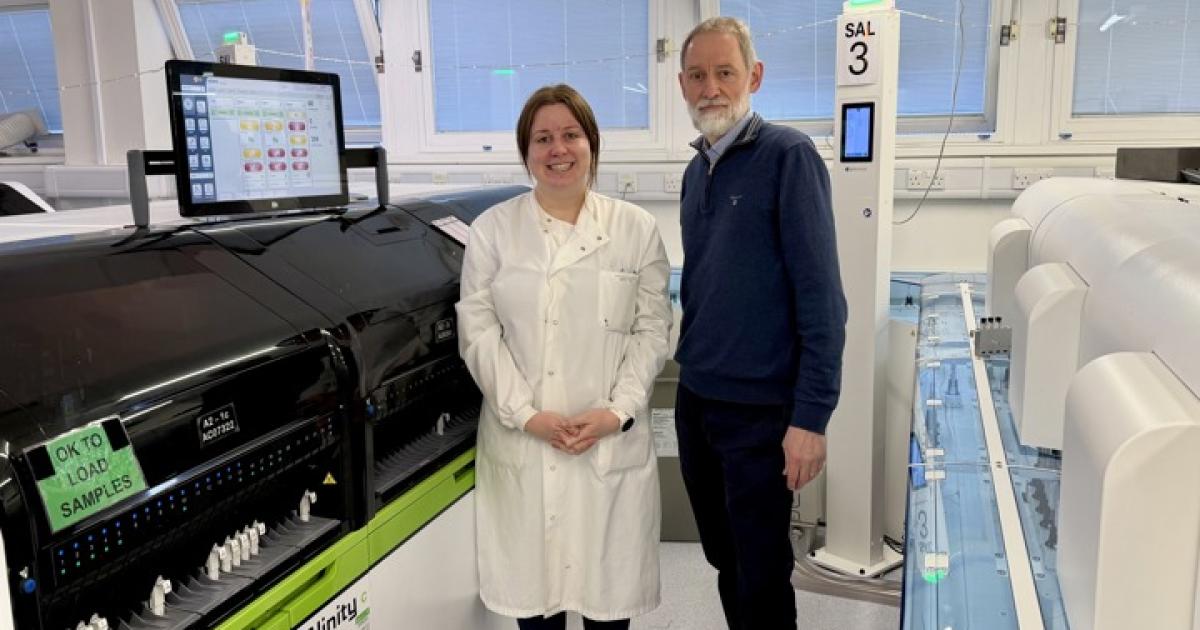
Oxford researchers find novel way to detect fake vaccines
[ad_1]
Researchers from the University of Oxford and Oxford University Hospitals NHS Foundation Trust (OUH) have found that routine hospital analysers could be used to help identify falsified liquid medical products.
Counterfeit vaccines and medicines pose a growing public health risk, especially in low and middle-income countries.
Recent estimates from the World Health Organisation suggest that around 10.5 per cent of medicines in these regions are falsified or substandard.
These fake products can fail to prevent or treat disease and may even cause harm due to toxic ingredients.
Professor Tim James, head biomedical scientist and lab manager at OUH and co-leader of the study, said: “One of the benefits of the approach taken to screen vaccines and insulin suspected of being falsified is the ability to select from a range of simple, highly reproducible, routine methods from the instruments repertoire to meet any given testing scenario, thereby providing flexibility.”
The study published in Scientific Reports showed that common hospital instruments could accurately distinguish between genuine and falsified liquid medical products.
These low-cost screening methods offer a practical way to flag suspect samples before further testing in specialised laboratories.
Dr Bevin Gangadharan, co-leader from the University of Oxford’s Department of Biochemistry and Kavli Institute for Nanoscience Discovery, said: “By repurposing a clinical chemistry analyser to detect and measure different salts and protein in liquid medical products, we were able to successfully differentiate genuine and falsified samples.
“This novel approach can be used globally due to the worldwide availability of biochemical analysers in hospitals and other clinical settings, including in low- and middle-income countries, where many cases of falsified medicines have been reported.”
The research was carried out by the Vaccine Identify Evaluation (VIE) Collaboration.
The group includes experts from OUH, the University of Oxford, the World Health Organisation, Agilent Technologies, and others.
The group is developing novel, non-invasive methods to detect falsified vaccines in global supply chains.
Professor Paul Newton, VIE project leader from the University of Oxford’s Centre for Tropical Medicine and Global Health, said: “There is a great need for accessible and inexpensive techniques for screening for falsified vaccines and liquid medicines.
“This novel approach of repurposing existing widely available hospital analysers holds promise for detecting these before they reach patients so that timely and appropriate action can be taken.”
This research was funded by two anonymous donor families, the Oak Foundation, the Wellcome Trust and the Medical and Life Sciences Translational Fund from the Translational Research Office of the University of Oxford’s Medical Sciences Division.
[ad_2]
Source link