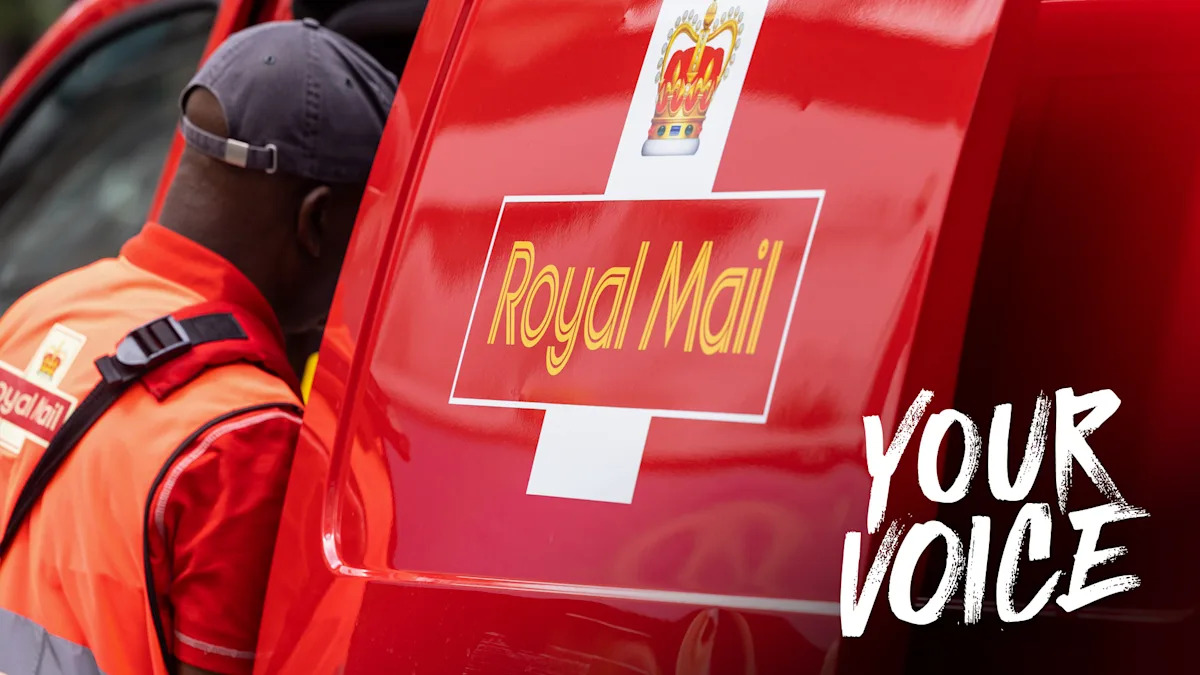
Royal Mail bosses to be called to Parliament over letter delivery failures
[ad_1]
Royal Mail executives will be called to Parliament to answer questions about issues with the firm’s letter delivery service, the BBC has learned.
The Business and Trade Committee had given Royal Mail two weeks to respond to allegations, reported by the BBC, that parcels were being prioritised over letters, resulting in delays to important, time-sensitive mail.
While that deadline technically ends on Monday, the BBC understands committee chair Liam Byrne has decided the service is so poor that bosses need to provide answers to MPs.
Royal Mail said attending the committee would allow it to discuss the work it was doing to transform the company.
It comes after hundreds of people contacted the BBC to express frustration over late deliveries, saying they had missed hospital appointments and had not received important documents including school certificates and bank statements.
More than a dozen Royal Mail postal staff from different delivery offices claimed rounds were being missed on a daily basis and parcels were being prioritised over letters as they are stretched beyond capacity.
In a letter earlier this month, the committee gave the company two weeks to respond to the allegations, and asked for commitments to improve what it described as “chaos”.
On Thursday Byrne said: “The Committee is very concerned by consistent and growing reports, and now many direct representations, about significant failures in Royal Mail’s letter delivery service.”
Royal Mail was bought by Czech billionaire Daniel Kretinsky’s EP Group last April, with Kretinsky promising to “put employees and customers at the heart of everything”.
Byrne said: “EP Group’s takeover was approved on a legal undertaking that it would maintain the Universal Service Obligation that is the bedrock of the UK’s postal service. But one year in, even first-class deliveries are way off track.”
‘Our business got complaints about delays’
Freya Kentish is the head of operations at online retailer Postbox Party, based in Northampton.
The firm uses Royal Mail to deliver its products, mainly as large letters.
It used to use the second-class service, which should deliver items in two days, but it was sometimes taking two weeks for items to arrive so it has now changed to the first-class service.
“We started getting complaints from customers about delays so we had to make a change,” says Kentish.
“Customers are used to instant deliveries through companies like Amazon so we have to be able to compete.
“It’s frustrating that we have to pay more just to get the service that we expected before. Profit margins are small in our business so it’s a big decision to upgrade the postage package we use and it’s a cost we have to swallow.”
A Royal Mail spokesperson said: “Attending the Business and Trade Committee will give us the opportunity to discuss the work we are doing to transform Royal Mail and the urgent need to implement changes to the Universal Service to deliver the services our customers want and ensure we are financially sustainable for the long term.”
In response to the BBC’s previous reporting, Royal Mail had said the “vast majority” of mail was delivered as planned, and poor weather and staff sickness had caused some short-term disruption that it was looking to resolve.
The regulator Ofcom has fined Royal Mail £37m in recent years for its poor letter delivery performance, which it has called unacceptable.
It says Royal Mail must publicly set out how it is going to deliver change and if “meaningful progress” is not seen soon, fines are likely to continue.
Additional reporting by Hannah Mullane
[ad_2]
Source link