Related Articles



Five Engine Failures Raise Safety Concerns for Russian Airlines in One Week
Five Engine Failures Raise Safety Concerns for Russian Airlines in One Week
A Surge in Mid-Flight Engine Failures
Within a single week, five Russian passenger aircraft experienced mid-flight engine failures, intensifying scrutiny over the safety of the nation’s civil aviation sector. These incidents, reported by The Moscow Times on March 20, underscore the growing operational challenges faced by Russian airlines amid stringent Western sanctions imposed following Russia’s full-scale invasion of Ukraine.
Between March 10 and March 16, a series of alarming technical malfunctions occurred across multiple carriers. On March 16, a Sukhoi Superjet 100 operated by Rossiya Airlines was forced to return to Sheremetyevo Airport after detecting high vibrations in its second engine during a flight from Moscow to Saint Petersburg. Earlier, on March 13, a Rossiya Airlines Boeing 737-800 on the Sochi-Novosibirsk route triggered an oil circulation system alarm in its first engine. On March 15, an Aeroflot Airbus A330 flying from Yekaterinburg to Bangkok returned to its departure airport due to a faulty air bleed valve in the second engine. Additionally, on March 12, Ural Airlines’ A320neo experienced a failure of its second engine thrust reverser during landing in Khabarovsk, while on March 10, an S7 Airlines Airbus A320 suffered a similar malfunction at Irkutsk airport.
These incidents highlight a broader crisis confronting Russian airlines, which are struggling to maintain their predominantly foreign-made fleets amid severe restrictions on spare parts and technical support.
Maintenance Challenges Amid Sanctions
The imposition of Western sanctions has drastically curtailed access to essential parts and maintenance services for Boeing and Airbus aircraft, which constitute a significant portion of Russia’s long-haul fleet. According to Kommersant, fewer than 60 of the 93 remaining wide-body jets are currently operational, with the remainder grounded or undergoing extended maintenance due to a shortage of spare parts. Attempts to establish repair facilities abroad, including in Iran, have thus far been unsuccessful.
The Ministry of Transport had forecasted in 2022 that the fleet would contract to 52 aircraft by 2030; however, current operational numbers are already nearing this threshold. In a reflection of the urgency, Russia formally requested the International Civil Aviation Organization (ICAO) in September 2025 to ease airworthiness restrictions on Boeing and Airbus aircraft.
The crisis affects all major Russian carriers. Aeroflot Group, for instance, has 17 of its 59 wide-body aircraft in maintenance, some grounded for over a year. Azur Air operates only six of its 11 planes, while Northern Wind flies just two of nine. The inability to replace foreign aircraft with domestic models exacerbates the situation. Reuters reports that only one of the 15 planned Russian-made aircraft for 2025 has been delivered to date.
Industry-Wide Implications and Safety Concerns
Russian aviation authorities have expressed deep concern over the deteriorating safety standards. Vladimir Kovalsky, head of Gosaviandzor, described the situation as a “systemic problem,” citing issues such as falsified maintenance records, unauthorized repairs, and a general lowering of safety protocols. Between 2023 and 2025, more than 480 aircraft—nearly half of the fleet—were prohibited from operation due to regulatory violations.
The crisis has also triggered market repercussions, including rising insurance premiums and increased scrutiny from both passengers and regulators. The reputational damage risks driving travelers toward competitors with higher safety standards, potentially reshaping market dynamics. Meanwhile, the Asia-Pacific region’s engine maintenance, repair, and overhaul (MRO) market is projected to exceed $30 billion by 2035, signaling a shift in maintenance focus that could further elevate operational costs for Russian airlines.
In response to these challenges, carriers have resorted to unconventional measures. Ural Airlines announced plans to extend the service life of its Airbus A320s beyond 96,000 flight hours at an uncertified maintenance center. Aviation journalist Andrey Menshenin warned that such practices further distance Russian aviation from international safety norms. Expert Vadim Lukashevich acknowledged that Russian airlines have gained “invaluable practical experience” in dismantling aircraft after emergency landings but cautioned, “One can only hope that this ‘great step forward’ will happen without human casualties.”

DIT-MCO International Introduces Advanced Cable Control System
DIT-MCO International Introduces Advanced Cable Control System for Helicopter Operators
DIT-MCO International, a prominent figure in wire harness testing systems for nearly 80 years, has launched its latest innovation: the AMP – Cable Manager Software (ACMS). This sophisticated software is designed to transform the management of cable inventories and the maintenance of adapter cables and test systems for helicopter operators, addressing critical challenges in the aviation industry.
Enhancing Cable Management in Aviation
DIT-MCO’s extensive expertise encompasses both commercial and military helicopters, as well as other complex platforms including fighter jets, submarines, and satellites. Wiring harnesses serve as vital electronic connections throughout these vehicles, linking essential components from nose to tail. Testing these harnesses requires advanced analyzers that depend on specialized adapter cables tailored to each aircraft model.
Kent Williams, director of sales, marketing, and customer service at DIT-MCO, highlights that adapter cables often constitute the largest investment in the testing process, sometimes surpassing the cost of the test systems themselves. Helicopter operators may maintain inventories of hundreds of these cables to accommodate various models, with total values reaching up to $3 million. Managing such extensive inventories presents significant challenges, primarily in tracking cable locations and monitoring their condition. Frequent handling can cause subtle wear and tear, which often leads to test failures mistakenly attributed to aircraft systems rather than the cables.
ACMS: A Strategic Approach to Cable Asset Management
The ACMS software addresses these challenges by redefining adapter cables as strategic, trackable assets rather than disposable items. It offers real-time visibility into cable status—whether in use, storage, or undergoing repair—and incorporates health management features that identify cables requiring maintenance before testing commences. This proactive approach reduces labor hours wasted on locating or repairing cables and minimizes costly troubleshooting caused by undetected cable faults.
Williams describes ACMS as a system that simultaneously manages inventory and cable health. The software’s core functionalities include real-time tracking of cable locations and usage, proactive health monitoring to flag cables needing repair or replacement, and predictive procurement capabilities that optimize purchasing decisions and reduce excess inventory.
Market Implications and Industry Challenges
The deployment of advanced cable control systems like ACMS entails considerable infrastructure investment, particularly in rapidly developing markets such as India, where demand for high-speed connectivity and modern aviation technology is accelerating. The introduction of ACMS is also expected to intensify competition among cable manufacturers and technology providers. Companies like Vistance Networks, noted for recent DOCSIS upgrades, may accelerate their own technological developments to maintain market share.
Emerging markets such as Brazil, where the aviation sector is still evolving but holds significant growth potential, are likely to become competitive arenas as industry players adopt similar advanced management solutions. As the aviation industry continues to evolve, DIT-MCO’s ACMS positions the company at the forefront of cable management innovation. However, sustained investment and strategic adaptation will be crucial for maintaining leadership in this dynamic global market.

Pitt Meadows Regional Airport: A Hub for Helicopter Maintenance
Pitt Meadows Regional Airport: A Growing Hub for Helicopter Maintenance
Nestled in the foothills of British Columbia’s Coastal Mountains, Pitt Meadows Regional Airport (YPK) is emerging as a significant centre for helicopter maintenance, repair, and overhaul (MRO) services. Located just 45 minutes from downtown Vancouver and near popular outdoor destinations, this modest yet evolving airport is strategically positioning itself to attract aerospace businesses seeking a competitive and accessible base in the region.
Strategic Location and Infrastructure Investment
Guy Miller, chief administrative officer and general manager of YPK, underscores the airport’s advantageous location in the Fraser Valley, adjacent to Vancouver International Airport (YVR). He highlights the region’s appeal, noting the comparatively lower cost of living as a key factor for companies considering expansion or relocation. Over the past eight years, Pitt Meadows has invested approximately C$11 million (US$7.9 million) in upgrading its infrastructure, including enhancements to helipads, runways, taxiways, lighting, and signage. These developments have transformed YPK into a modern facility that currently supports a diverse range of operators, from helicopter and fixed-wing aircraft to business jets and private general aviation.
Ashley Byrne, director of administration and operations, emphasizes the airport’s flexibility as a core strength. YPK offers adaptable leasing options and a variety of site configurations, setting it apart from other regional airports. With over 750 acres in total and 300 acres available for future development, the airport boasts a significantly larger land base than many competitors, providing ample room for growth and new MRO facilities.
Challenges and Future Prospects
Despite its promising trajectory, Pitt Meadows faces challenges in establishing itself as a leading helicopter maintenance hub. Regional airports in the United Kingdom, for instance, have made substantial investments in expanding capacity and developing skilled workforces for aircraft painting and maintenance, intensifying competition for international MRO contracts. The economic growth driven by these UK airports may influence market dynamics, encouraging North American counterparts to enhance their maintenance capabilities and workforce development efforts.
Geopolitical uncertainties also factor into the airport’s strategic planning. Potential disruptions to flight operations in the Gulf region due to ongoing conflicts could have ripple effects on global aviation, impacting the positioning and operational strategies of airports like Pitt Meadows that aim to attract international MRO business.
Looking ahead, YPK has ambitious plans, with up to C$120 million (US$86.3 million) earmarked for new projects over the next five years. The airport is prepared to accommodate a range of MRO operations, from mid-sized facilities employing 30 to 50 staff to larger enterprises such as an Airbus Helicopters facility. Currently, the airport features three helipads on its south side, two additional stalls on the north, and is developing a dedicated heli-park capable of housing five large hangars for rotary-wing aircraft.
As land availability tightens across the region, Pitt Meadows Regional Airport is carving out a niche as a flexible and growth-oriented hub for helicopter maintenance, navigating both local competition and evolving global aviation dynamics.

Eco Innovation Group Names Brian Vitale Director of Aviation to Advance Sustainable Fuel Platform
Eco Innovation Group Appoints Brian Vitale as Director of Aviation to Advance Sustainable Fuel Platform
Eco Innovation Group, Inc. (OTC:ECOX), a company at the forefront of developing next-generation sustainable fuel technologies, has announced the appointment of Brian Vitale as its new Director of Aviation. This strategic move coincides with ECOX’s efforts to commercialize Sustainable Aviation Fuel (SAF) and synthetic fuel technologies, particularly through its pending acquisition of Kepler GTL Technologies Inc.
Extensive Aviation Expertise to Support Commercialization
Brian Vitale brings over 45 years of comprehensive aviation experience, encompassing commercial airline operations, military aviation, aircraft maintenance, and aviation safety. He recently concluded a distinguished 34-year career as a Captain with American Airlines, where he piloted a diverse fleet including the Boeing 737, 757, 767, 777, Airbus A320, and Fokker 100. His extensive domestic and international flying experience is complemented by deep expertise in fuel performance, operational efficiency, safety protocols, and airline decision-making processes. These competencies are critical as ECOX transitions from technology development to real-world deployment of its sustainable fuel platforms.
Prior to his airline career, Vitale served as a U.S. Army helicopter pilot and aviation officer, flying UH-1 and UH-60 helicopters. His military service was distinguished by recognition such as the Army Commendation Medal for Heroism, awarded for life-saving missions during the Great Mississippi Flood of 1993. Additionally, Vitale has held roles as an Aviation Safety Officer and instructor, and began his career as an FAA-certified Airframe and Powerplant mechanic. This technical foundation provides him with a thorough understanding of aircraft systems and maintenance standards.
Driving Industry Adoption and Operational Integration
In his role as Director of Aviation, Vitale will concentrate on airline engagement, certification pathways, and operational validation to ensure that ECOX’s gas-to-liquids (GTL) and coal-to-liquids (CTL) fuel platforms meet the stringent requirements of commercial airlines. His unique combination of pilot experience, technical knowledge, and safety leadership positions him to effectively bridge the gap between engineering development and airline adoption.
The appointment arrives at a critical juncture for the sustainable aviation sector. Despite regulatory mandates such as the European Union’s requirement for 1.2% of aviation fuel to be electro-sustainable aviation fuel (eSAF) by 2030, commercial-scale production of eSAF remains limited. The global market for sustainable aviation technology is projected to expand at a compound annual growth rate of 13.5% from 2023 to 2032, driven by innovations in electric propulsion, hydrogen engines, and SAF. Industry leaders including Delta Air Lines and Shell are forging partnerships to overcome logistical and adoption challenges, while regions like Brazil confront unique structural barriers to sustainable aviation implementation.
Richard Hawkins, CEO of Eco Innovation Group, emphasized the significance of Vitale’s appointment, stating, “Brian has spent his career inside real aviation environments, not around them. He understands how airlines actually operate, how decisions get made, and what it takes to introduce something new into that system. That matters at this stage. As we move into execution, the priority is making sure what we are building translates directly into operational reality and can be adopted without friction.”
Brent Nelson, CEO of Kepler GTL Technologies, also highlighted Vitale’s value to the company’s commercialization efforts: “Brian brings a combination of operational, technical, and safety experience that is difficult to replicate. As we move toward commercialization of our GTL and CTL technologies, his perspective will be critical in ensuring alignment with airline requirements and accelerating adoption.”
ECOX continues to strengthen its leadership team in conjunction with the Kepler GTL transaction and its broader commercialization strategy, positioning itself to meet the increasing demand for sustainable and synthetic aviation fuels in a rapidly evolving global market.

1978 Cessna P210N Centurion: A Rare Pressurized Single-Engine Aircraft
1978 Cessna P210N Centurion: A Rare Pressurized Single-Engine Aircraft
The 1978 Cessna P210N Centurion stands out as a rare example of a pressurized, single-engine piston aircraft, offering a unique combination of performance and comfort for discerning pilots. This model has long been recognized for its capability as a premier cross-country traveler, blending speed, a spacious interior, and respectable short-field performance into a versatile package.
Design and Performance Features
Cessna’s success with the P210 series built upon earlier attempts by other manufacturers to produce pressurized piston singles, many of which faced reliability challenges. Leveraging experience gained from the P337 Skymaster, Cessna introduced the P210 with a pressurized cabin that allowed for high-altitude flight without compromising passenger comfort. While turbocharged variants of the 210 could achieve higher and faster climbs, they typically required supplemental oxygen, which was often inconvenient for passengers.
The P210N model addressed this limitation by combining pressurization with turbocharging, enabling pilots to cruise at high altitudes without the need for oxygen masks or cannulas. This feature made the aircraft particularly appealing for family or business travel, where comfort and convenience are paramount. The P210N accommodates six occupants and is equipped with a modernized avionics suite, including Garmin GTN 750Xi and GTN 650Xi navigators, a GTX 345 transponder with ADS-B In and Out, a PS Engineering PMA7000B-BT audio panel, Garmin OBS indicator, and a Bendix/King K 152A horizontal situation indicator.
Aircraft Condition and Upgrades
The specific 1978 Cessna P210N Centurion currently available has accumulated 2,675 hours on the airframe, with only 108 hours since a comprehensive overhaul of its 310-horsepower Continental TSIO-520-P engine and McCauley aluminum propeller. The engine overhaul included the installation of new Superior cylinders, a new camshaft and lifters, a Riley intercooler, new engine mounts, a new vacuum pump, a rebuilt turbocharger, and an overhauled exhaust system and wastegate. Additional enhancements include a Robertson STOL kit, inflatable door seals, and a Keith air conditioning system, contributing to a useful load capacity of 1,395 pounds.
Market Context and Considerations
Prospective buyers should consider the broader market environment when evaluating this aircraft. Ongoing geopolitical tensions have disrupted supply chains, potentially affecting the availability of maintenance parts and services. This uncertainty may influence decisions regarding the operation and longevity of legacy piston aircraft such as the P210N. Furthermore, rising crude oil prices have increased aviation fuel costs, impacting operational budgets for owners of older piston-powered airplanes.
At the same time, advancements in propulsion technology are reshaping the general aviation landscape. Developments like Rolls-Royce’s UltraFan 30 engine demonstrator promise greater efficiency and may alter the competitive dynamics for pressurized single-engine aircraft.
Despite these challenges, the 1978 Cessna P210N Centurion remains a compelling option for pilots seeking a balance of performance, comfort, and versatility. The aircraft is currently listed at $259,900 on AircraftForSale, with financing options available through FLYING Finance, which offers tools for estimating monthly payments and access to aviation finance specialists.
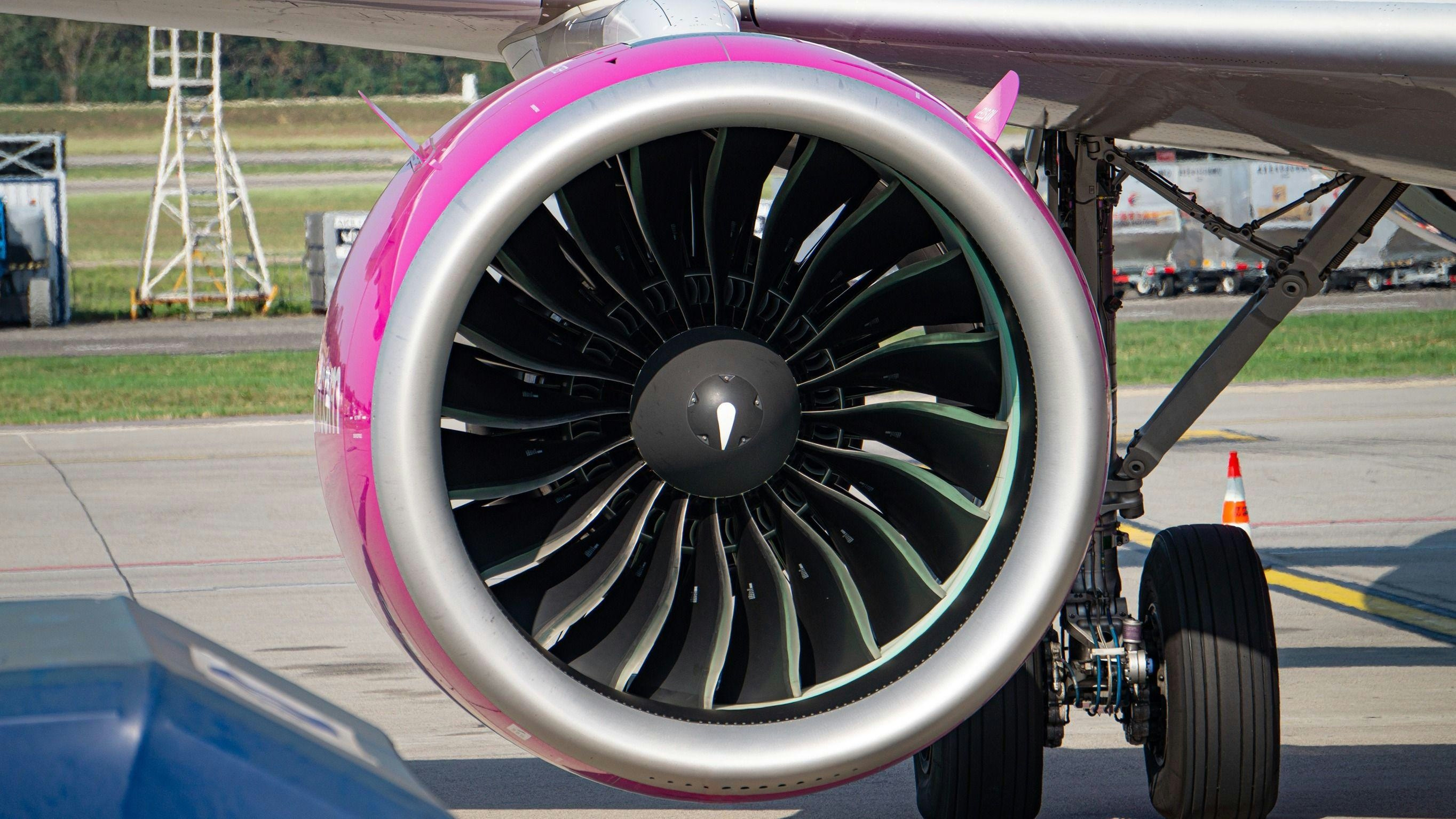
Airbus A320 Engine Market Shifts as Leap and GTF Gain Share While CFM56 Declines
Airbus A320 Engine Market Shifts as Leap and GTF Gain Share While CFM56 Declines
The global Airbus A320 fleet is experiencing a marked transformation as airlines increasingly replace legacy engines with next-generation propulsion systems. This shift reflects broader industry priorities centered on efficiency, sustainability, and fleet modernization. Analysis of utilization data, benchmarked each February from 2019 through 2026, reveals the pace and impact of these changes.
Transition from Legacy to Next-Generation Engines
In February 2019, the A320 market was dominated by older engine models. The CFM International CFM56 powered over 300,000 flights, accounting for more than 55% of total A320 activity, while the International Aero Engines (IAE) V2500 represented just over 30%. At that time, next-generation engines such as the CFM LEAP and Pratt & Whitney PW1000G geared turbofan (GTF) collectively accounted for only 13 to 15% of flights.
By February 2020, the onset of the COVID-19 pandemic led to a reduction of approximately 10,000 A320 flights. Despite this decline, the share of flights powered by LEAP and GTF engines increased to nearly 20%, reflecting the gradual integration of A320neo-family aircraft into airline fleets.
The most significant developments have occurred since the pandemic. By February 2023, A320 flight activity not only recovered but exceeded pre-pandemic levels, with growth continuing into 2024 before stabilizing through 2025 and early 2026. Although overall flight volumes have plateaued, the composition of the fleet has continued to evolve rapidly.
Decline of Legacy Engines and Rise of New Technologies
Legacy engines are steadily losing market share. The proportion of flights powered by CFM56 engines declined from approximately 43% in 2024 to around 42% in 2026, while V2500-powered flights decreased from 23% to 22% over the same period. These trends reflect the ongoing retirement of older A320ceo models and accelerated fleet renewal programs among major carriers.
Conversely, next-generation engines have gained substantial traction. The CFM LEAP engine now powers over 25% of all A320 flights worldwide, establishing it as the fastest-growing engine type in the narrowbody segment. Its appeal is driven by fuel burn and CO₂ emissions reductions of 15 to 20% compared to previous-generation engines, alongside lower maintenance costs.
The Pratt & Whitney GTF accounts for less than 10% of A320 utilization. Although it offers efficiency improvements comparable to the LEAP, its adoption has been hindered by durability and maintenance challenges affecting early production units. These issues have necessitated ongoing repairs and retrofits to enhance reliability. Additionally, Airbus has encountered production slowdowns due to Pratt & Whitney’s inability to meet contracted GTF engine deliveries, resulting in reduced A320neo production rates and impacting Airbus’s delivery schedules. This ongoing Pratt & Whitney engine crisis highlights the complexities involved in transitioning to new technologies, even as airlines strive to modernize their fleets.
The contrasting trajectories of the CFM56 and the LEAP and GTF engines underscore the aviation industry’s commitment to modernization, operational efficiency, and environmental responsibility. While legacy engines continue to constitute a significant portion of the global fleet, their role is steadily diminishing as airlines prioritize performance, cost savings, and sustainability in the evolution of narrowbody aircraft.

Flying Taxis Could Begin Operating in 2026, but Their Future Remains Uncertain
Flying Taxis Could Begin Operating in 2026, but Their Future Remains Uncertain
The concept of flying taxis, once confined to the realm of science fiction, is gradually approaching reality as technology companies accelerate efforts to commercialize electric vertical take-off and landing (eVTOL) aircraft. Firms such as Joby Aviation and Archer Aviation have announced plans to launch air taxi services in Dubai later this year, marking a potential milestone for the industry. Despite this progress and substantial investment, experts warn that widespread adoption of flying taxis remains several years away due to ongoing technical, regulatory, and economic challenges.
Technological Promise and Regulatory Challenges
eVTOL aircraft offer the promise of quieter, cleaner, and more efficient urban transportation compared to traditional helicopters. These vehicles, often resembling large drones equipped with multiple electric motors and propellers, are designed to transform urban mobility by providing rapid, on-demand air travel. However, the journey from prototype to commercial service is complex and fraught with obstacles.
Regulatory approval stands as one of the most significant barriers. The U.S. Federal Aviation Administration (FAA) recently initiated a new phase of its advanced air mobility program, which involves evaluating air taxi performance across 26 states during the summer. Nonetheless, full certification for passenger-carrying services has yet to be granted. Aviation authorities worldwide are engaged in developing comprehensive regulatory frameworks, but the process remains intricate and time-consuming.
Infrastructure, Safety, and Market Dynamics
Beyond regulatory hurdles, safety concerns and the need for robust infrastructure present additional challenges. Establishing a network of vertiports—dedicated takeoff and landing sites—and ensuring sufficient operational capacity require substantial investment and careful urban planning. Market responses have been varied: while companies like Archer and Joby have secured federal approval for pilot programs, others such as Lucid Motors have clarified that their flying car concepts are not currently under active development. Some competitors continue to focus on testing and deployment, whereas others remain in the conceptual stage.
Previous high-profile initiatives have encountered setbacks. Plans to introduce flying taxis for the 2024 Paris Olympics were abandoned due to delays in certifying vehicle engines. Similarly, Archer Aviation’s goal to launch services ahead of the upcoming FIFA World Cup in Los Angeles has been postponed, with the company now aiming for the 2028 Los Angeles Olympic Games.
Industry Outlook
Despite these challenges, optimism within the industry endures. Sergio Cecutta, founder and partner at SMG Consulting, which specializes in the advanced air mobility sector, remarked, “We think that full-scale services is more of a middle of the next decade kind of thing, not anytime soon.” The vision of airborne urban transport continues to inspire innovation, yet experts generally agree that it may take a decade or more before flying taxis become a common feature in city skies.
While pilot programs and regulatory initiatives are progressing, the future of flying taxis remains uncertain. The industry must navigate a complex landscape of regulatory, safety, and infrastructure issues before these vehicles can be deployed at scale. For now, the prospect of an airborne alternative to traditional ride-hailing services remains a distant but compelling possibility.
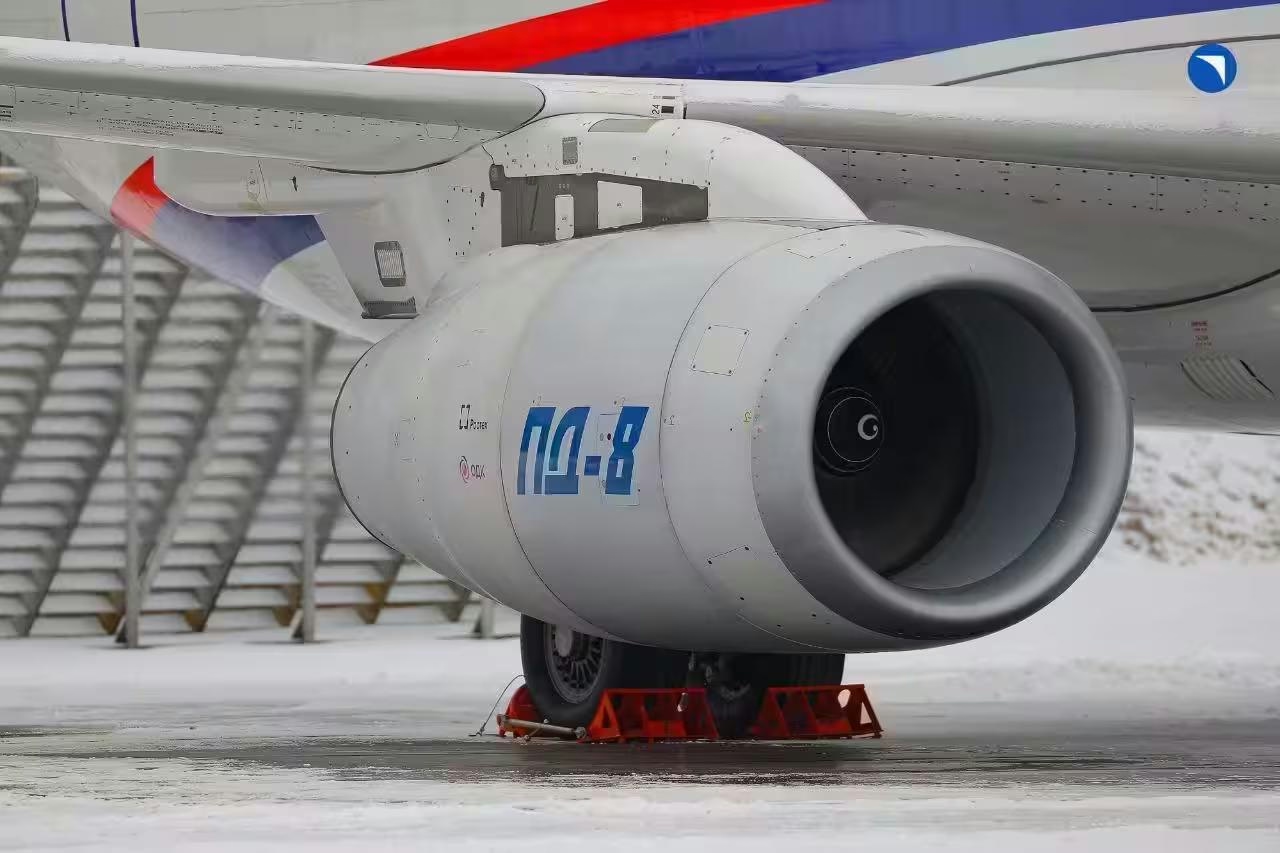
PD-8 Engine Thrust Issue Resolved; Certification Date Announced
PD-8 Engine Thrust Issue Resolved; Certification Date Announced
Certification Timeline and Technical Developments
The certification of the latest PD-8 aircraft engine is now scheduled for April 2026, according to materials released by Rosaviatsia during the final board meeting of the Ministry of Transport of the Russian Federation. This engine is set to become the primary powerplant for the short-haul SJ-100 airliner and, in the longer term, for the Be-200 amphibious aircraft.
Originally, the PD-8 certification was planned for November 2025 but was subsequently postponed to the first quarter of 2026. The delay followed reports in December 2025 from a source within the aviation industry, cited by Business Online, indicating that the PD-8 engine was not producing the necessary thrust to support flights with a full passenger cabin. The thrust at maximum take-off mode for the PD-8 is rated at 8,056 kgf. Recent updates suggest that the thrust issue has now been resolved, allowing the certification process to proceed.
Manufacturing Innovations
Rostec has released unique footage showcasing the manufacturing process of PD-8 components for the SJ-100 aircraft. The video highlights the 3D printing of the oil sump, a critical element of the engine’s oil system, underscoring the advanced production techniques employed in the development of the PD-8 engine.

ATEQ Expands Testing Capabilities with T-RX Integration
ATEQ Expands Testing Capabilities with T-RX Integration
ATEQ Aviation, a prominent global provider of aeronautical test equipment, has announced the acquisition and integration of the T-RX avionics testing solution, formerly owned by CCX Technologies. This strategic development significantly enhances ATEQ’s product portfolio by merging its established air data testing expertise with advanced avionics diagnostics, thereby strengthening its service offerings to the aircraft maintenance sector.
Enhancing Testing Solutions for Aircraft Maintenance
The T-RX system is widely recognized for its compact design and dependable performance in radio, pulsatory, and GPS testing. By incorporating this technology, ATEQ now delivers a unified testing platform that integrates its well-regarded ADSE series Air Data Test Sets with a versatile avionics testing solution. This combined offering enables Maintenance, Repair, and Overhaul (MRO) organizations to perform comprehensive compliance testing under 14 CFR 91.411 and 91.413 regulations within a single, streamlined workflow. These inspections are essential for aircraft certification and ongoing airworthiness, making the integrated solution particularly valuable.
This innovation allows for simultaneous pitot-static and avionics verification, expediting inspection and certification processes while minimizing the need for multiple devices in the hangar. Backed by ATEQ’s strong reputation for aviation safety, the integration is expected to deliver enhanced accuracy and operational efficiency to maintenance professionals.
Challenges and Industry Implications
Despite the clear benefits, the integration of advanced technologies such as the T-RX presents challenges. The process involves considerable upfront investment in technology upgrades and necessitates extensive training for personnel to adapt to the new systems. While the expanded testing capabilities may bolster investor confidence, some market analysts remain cautious regarding the immediate return on investment.
The move is also likely to prompt competitive responses within the industry. Rivals may accelerate their own investments in testing technologies or pursue strategic partnerships to maintain market share. This trend aligns with broader industry developments, as companies like HD Hyundai Electric and Intuitive Machines are simultaneously expanding their testing and production capacities, reflecting a sector-wide shift toward enhanced technical capabilities.
Gabriel Nativel, Global Director of ATEQ Aviation, described the integration as a natural progression of the company’s strategy. He emphasized that combining the industry-leading Air Data Test Sets with a high-performance avionics tester provides maintenance professionals with a more comprehensive, efficient, and reliable solution for their daily operations.
As ATEQ advances with the T-RX integration, the company aims to establish a new benchmark for comprehensive, efficient, and precise aircraft maintenance testing, while navigating the complexities of technological innovation and an increasingly competitive market environment.
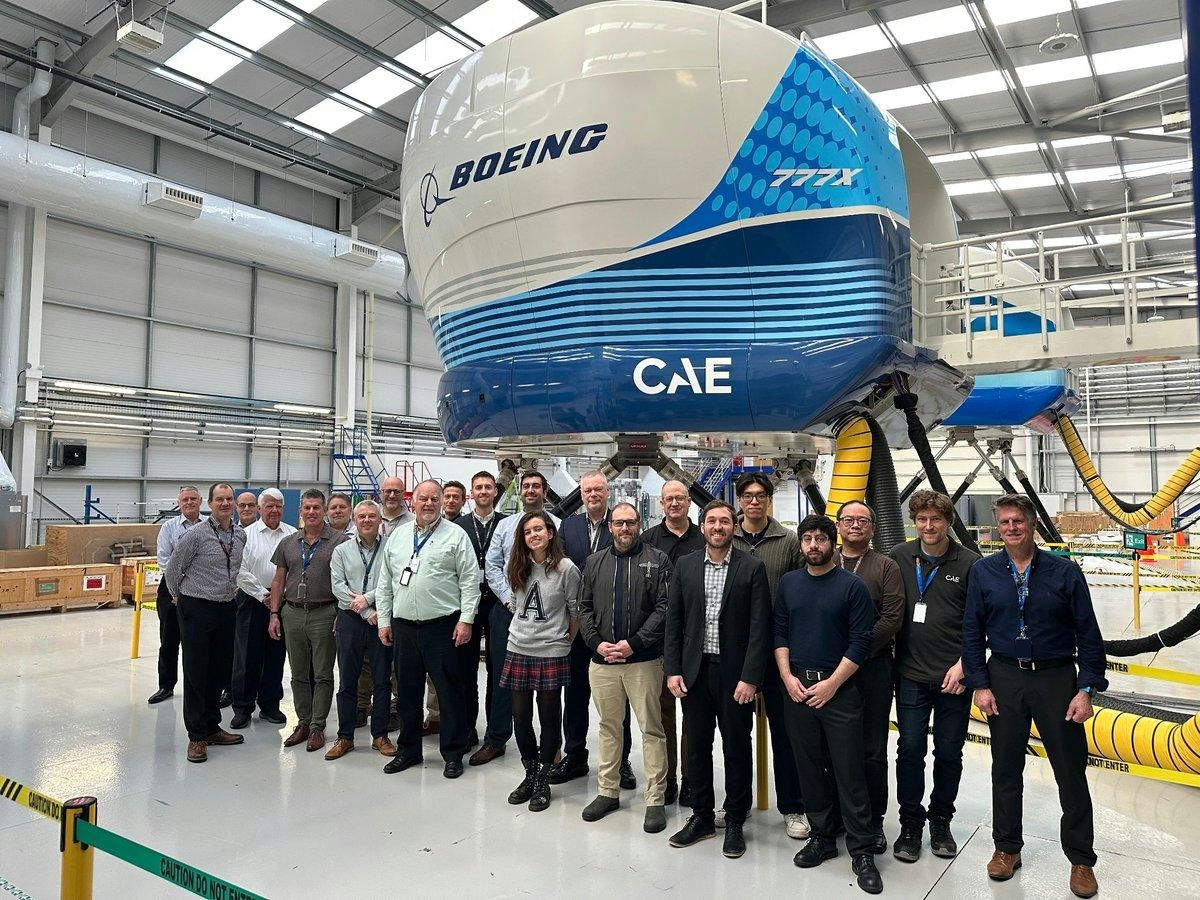
FAA Clears Next Phase for Boeing 777X Ahead of 2027 Entry
FAA Advances Boeing 777X Certification Ahead of 2027 Service Entry
SEATTLE — The Boeing 777X program has reached a pivotal milestone as the Federal Aviation Administration (FAA) authorized the aircraft to proceed into the next critical phase of certification testing. This development brings Boeing closer to the anticipated entry into service of the 777-9 model, now scheduled for 2027. Lufthansa is positioned to be the launch customer, with initial deliveries expected early that year.
Certification Progress and Continuing Challenges
Boeing has secured FAA clearance to advance into Phase 4A of the Type Inspection Authorization process for the 777-9, representing the fourth of five key certification stages. Initiated in November, this phase concentrates on verifying system performance, operational reliability, and compliance with regulatory standards across a range of conditions. Although over two dozen 777-9 aircraft have been constructed, only four are currently dedicated to certification testing, with Boeing managing multiple phases concurrently.
Despite this progress, the certification journey remains intricate. Additional testing beyond the five principal phases will be necessary, particularly involving production-standard aircraft. Boeing maintains its target for a 2027 service entry, yet the program’s six-year delay has already imposed significant operational and financial strains on major airline customers.
Impact on Airlines and Market Adaptations
Lufthansa, which has placed orders for 20 Boeing 777-9s, intends to integrate the aircraft into a comprehensive fleet modernization plan. The delays have compelled the airline to reactivate older models—including Airbus A340s, Boeing 747-400s, and Airbus A380s—to accommodate growing travel demand. The 777-9 is designed to replace aging 747s, offering comparable capacity with enhanced fuel efficiency through its twin-engine configuration. Lufthansa aims to retire its 747-400 fleet by the decade’s end, with further widebody retirements planned into the early 2030s.
Emirates, the largest 777X customer with orders totaling 270 aircraft across the 777-8 and 777-9 variants, has also confronted challenges stemming from the delay. To bridge the gap, Emirates has initiated an extensive retrofit program for its existing Boeing 777 and Airbus A380 fleets, upgrading cabin interiors and expanding premium economy options. This approach enables the airline to sustain competitiveness and extend the operational life of its current fleet while awaiting new deliveries.
Industry Implications and Competitive Landscape
The extended delay of the 777X has influenced airline fleet strategies and broader market dynamics. MTU Aero Engines, a principal supplier, anticipates increased deliveries of new engines, including the GE9X that powers the 777X, despite the program’s setbacks. Boeing’s commercial airplane division now projects a return to profitability in 2027, later than originally forecast, as it absorbs elevated costs associated with the acquisition of Spirit AeroSystems.
Market responses remain cautious amid Boeing’s ongoing financial and operational challenges. Competitors such as GE Aerospace, which supplies engines for other Boeing models like the 777-300ER and 777F, stand to benefit from heightened demand as airlines adjust their fleet plans in light of the 777X’s delayed introduction.
Outlook
As the 777X advances through the final certification stages, airlines and industry stakeholders continue to adapt to evolving timelines. The FAA’s recent approval marks a significant step forward, yet the path to commercial service remains complex, with further testing and market adjustments anticipated in the months ahead.
Source link