Every Track from Björk’s ‘Post’ Ranked
[ad_1]
The meaning behind the title of Björk’s 1995 album Post is twofold. The album was, of course, a postscript to 1993’s Debut, the singer’s first solo effort following the dissolution of her band the Sugarcubes, but it was also designed as a mixtape of messages to friends and family back in Iceland. The blazer Björk dons on the album’s cover, photographed by legendary shutterbug and frequent collaborator Stéphane Sednaoui, was created by British fashion designer Hussein Chalayan and made out of waterproof envelope paper bearing the markings of the Royal Mail.
Each song on Post has a distinct sound—trip-hop bumps up against house, industrial rock, and jazz—and an intended recipient. The grimy “Army of Me” is a kick in the pants to Björk’s little brother; the subterranean “Enjoy” is a love letter to London; the dubby “Possibly Maybe” is a farewell to Sednaoui, whom she’d been dating; and so on.
Though Björk is very much an auteur, she’s always been savvy enough to recognize the virtues of collaboration. Unlike Debut, which Björk co-produced entirely with Bristol pioneer Nellee Hooper, Post saw the artist working with a bevy of other names in the electronic music pantheon as well, including Tricky, Howie B, and Graham Massey. Thus, Post remains Björk’s most eclectic work to date, impeccably tied together by the singer’s singular vision and whimsicality. Sal Cinquemani

11. “You’ve Been Flirting Again”
Björk takes on numerous personas across her discography, and on the concise “You’ve Been Flirting Again,” she assumes the posture of a counselor or trusted friend, offering a mantra for processing conflict: “All that she said was true…All that she meant was good…How you reacted was right.” The track, at just two-and-a-half minutes long, is Post’s least substantial, playing like an extended interlude. Arriving halfway through, it’s the first moment that the album’s frenetic action comes to a halt. In that sense, it serves as the eye of the proverbial emotional storm, yet it ends on a discordant, unsure chord that tees up what follows. Eric Mason

10. “Cover Me”
Upon embarking on the creation of her sophomore effort with producer Nellee Hooper, Björk wrote “Cover Me” as a thank you—and, perhaps, a warning—to him. “While I crawl into the unknown, cover me,” she sings, accompanied by little more than a hammered dulcimer and some spacey sound effects. “I’m going to prove the impossible really exists!” If, at first, Post feels sonically scatterbrained, it’s this mutual trust between artist and collaborator that makes the impossible seem not just plausible, but preordained. Cinquemani
9. “It’s Oh So Quiet”
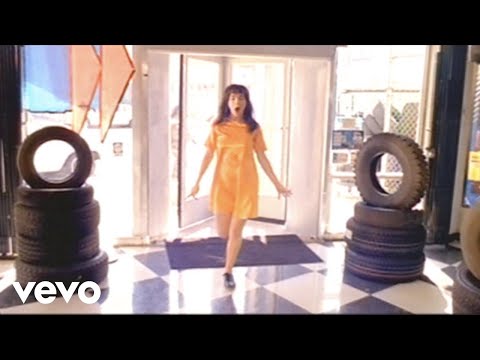
If not for the brass arrangements on such disparate tracks as the worldbeat-infused “I Miss You” and the industrial “Enjoy,” “It’s Oh So Quiet”—a cover of a 1950s big band B-side (itself a cover of the German song “Und jetzt ist es still”)—would sound even more out of place on Post than it already does. In isolation, though, the song is more than a mere camp curiosity, at once displaying Björk’s boundless musicality and proving her to be the bonkers pop banshee her critics have always accused her of being. Cinquemani

8. “I Miss You”
“I Miss You” takes an everything-but-the-kitchen-sink approach to instrumentation, cycling between typewriter clicks, Latin-jazz brass, and bongos at a feverish pace. The maximalist production could only be matched by a vocalist with versatility and volume, and Björk belts and bellows her way through lyrics about her desperate wait to meet “the one.” “I’m s-so impatient,” she stutters with a palpable intensity, before releasing it with a scream: “Who are you?!” Mason

7. “The Modern Things”
A holdover from the Debut sessions, “The Modern Things” is itself a mirror to the song’s “cars and such,” waiting patiently for its turn while “the irritating noises of dinosaurs and people” (or, say, “The Anchor Song”) had their moment. Björk and Nellee Hooper’s instinct to give the track some extra baking time were spot-on: Its palaeontologic illogic would’ve disrupted Debut’s first-person flow. But sequenced in the fertile aftermath of “Hyperballad” on the wider-ranging Post, its vision of machines springing from the earth to, like locusts, mate and die makes perfect Björkian sense. Eric Henderson
6. “Isobel”
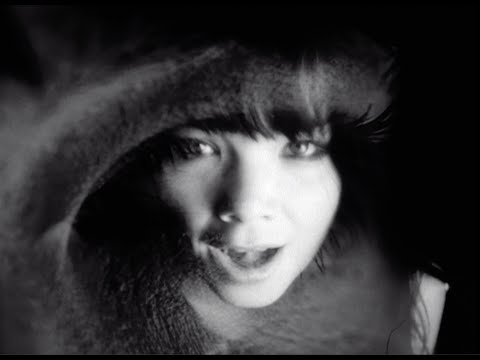
Most of Post embodies the ’90s randomized CD disc-changer ethos via sequences emphasizing the juxtapositions between songs, stressing the diversity of her influences. “Isobel” is arguably the album’s centerpiece moment of synthesizing everything and the kitchen sink in the space of a solitary pop song. Balancing the pillowy, trip-hop-tinged sensibilities of Nellee Hooper and Marius de Vries with the impressionistic lyrics of poet Sjón (here marking his first collaboration with Björk), and emulsifying the disparate elements via the slick arranging hand of Eumir Deodato, “Isobel” proffers a workable cohesion from Björk’s eclecticism, paving the way for her singular statements soon to come. Henderson

5. “Headphones”
In the wake of Karlheinz Stockhausen’s death in 2007, Björk wrote a piece for the Guardian plainly titled “Why I love Stockhausen.” The German composer’s influence can most obviously be heard in Björk’s almost entirely vocal 2004 album Medúlla, but “Headphones,” a somnolent tone poem dedicated to the sensory power of music itself, also bears the marks of Stockhausen’s minimalist electronic soundscapes. Pre-dating ASMR by more than a decade, “Headphones” is an early specimen of Björk’s career-long endeavor to prove that music is a biological imperative whose roots are downright cellular. Cinquemani

4. “Possibly Maybe”
“Possibly Maybe” is a markedly spacious take on trip-hop, eschewing the genre’s sultry atmospherics and grooves to spotlight Björk’s aching lyrics and inner conflict, delivered with the sensibilities of an avant-garde poet. “How can you offer me love like that?/I’m exhausted, leave me alone,” she cries, her voice submerged in the mix as if she’s slamming a door behind her. Just as unconventional is the song’s structure, which comprises seven verses stretched over a canvas of electronic tones. Each vivid lyric marks a step in the dissolution of a relationship: “I suck my tongue/In remembrance of you,” she concludes, encapsulating the bittersweet tension between desire and self-sufficiency. Mason

3. “Enjoy”
Of all the hard turns fueling Post, none is ballsier than when Björk slams the door shut on her fire-breathing lark of a Betty Hutton cover (“It’s Oh So Quiet”) and opens a trap door into “Enjoy.” Spare, ugly, and lo-fi, it’s the ’90s equivalent of Prince taking the bassline out of “When Doves Cry,” and just as jaw-droppingly unsparing. A fruitful collaboration from the tumultuous, all-too-brief romantic collaboration between Björk and trip-hop legend Tricky, the thick industrial beats and punishing horn stabs underline her volatile take on the negligible difference between love and hate. “I wish I’d only smell this/And didn’t have to taste,” she muses before concluding, “This is sex without touching.” If only “Enjoy” offered so easy an escape, but no. To paraphrase from another 1995 masterpiece, it’s no butterfly. It prowls. Henderson

2. “Army of Me”
If, sonically, Post offers a bevy of styles and moods, the volcanic opening track, “Army of Me,” sets the emotional tone for what follows. Accompanied by industrial synths befitting Nine Inch Nails, a Led Zeppelin drum sample, and one of the meanest basslines in trip-hop, the track finds Björk at her angriest. Still, there’s a winking sense of humor beneath all the aggression. There are gentler ways to tell someone to get a job, but it’s the melodrama, the amplification of everyday foibles to apocalyptic levels, that makes “Army of Me” so devilishly fun and distinctly Björkian. Mason

1. “Hyperballad”
In “Hyperballad,” Björk confesses to a puzzling ritual: She rises each morning to indulge her destructive side, tossing household items off a cliff and observing their plummet before returning to the comfort of her lover. She imagines herself taking the big dive, too, but never actually jumps. After all, as she assures over the song’s perfect club chorus, she’s doing this for us. The singer’s lyrical Rubik’s Cube is endlessly interpretable, but however powerfully it insists on the tension between love and individuality, its composition is all Romantic reconciliation. Björk’s cosmopolitan pop sensibility makes room for disco, baroque pop, and acid house, while her singular voice eventually dissolves into the song’s grandiose strings. If she senses something tragic in the desire to lose oneself completely to love, she apparently detects no such danger in surrendering, at least momentarily, to music. Matthew Cole
Since 2001, we’ve brought you uncompromising, candid takes on the world of film, music, television, video games, theater, and more. Independently owned and operated publications like Slant have been hit hard in recent years, but we’re committed to keeping our content free and accessible—meaning no paywalls or fees.
If you like what we do, please consider subscribing to our Patreon or making a donation.
[ad_2]
Source link