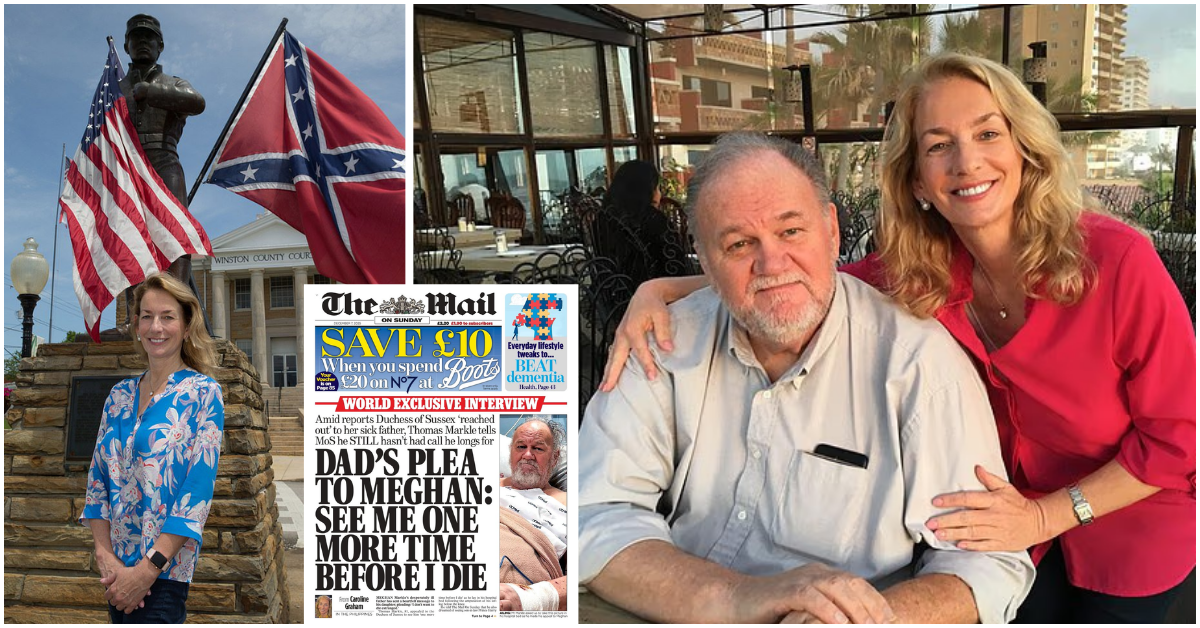
How the Daily Mail Turned Thomas Markle’s Medical Emergency Into a Media Weapon
[ad_1]
Caroline Graham’s role in Thomas Markle’s latest medical drama exposed a level of access that no reporter should possess. She was not observing from the outside. She was inside his private world, moving information between a sick man and a tabloid empire that has spent years shaping hostile narratives about Meghan Sussex. Her presence turned a family medical event into a coordinated media spectacle. What unfolded followed a blueprint long familiar to those who track how the Daily Mail manufactures royal storylines.
Graham did not simply report the crisis. She steered it, controlled the flow of updates and positioned herself at the centre of a story designed to circulate on cue. This article examines the structure behind that influence and how her dual proximity to the Markles and the Mail shaped the narrative from the moment the first text was sent.
Advertisement
How Caroline Graham Became Embedded in Thomas Markle’s Life
Caroline Graham holds a senior role at the Daily Mail and has spent years reporting on the Sussex tension. Her ties to the royal family stretch back through her work as Queen Camilla’s biographer, a credential that places her closer to the monarchy than most reporters. That history matters when examining her involvement with Thomas Markle.

She developed a close relationship with him during the period when UK tabloids built intense interest in Meghan’s family history. Australian magazines reported that Graham formed a long-term connection with him in Mexico. She appeared in his home for extended stretches. Her reporting drew upon documents, photographs and memories he had not shared publicly before. These details suggest a dynamic in which she gained access normally reserved for relatives.
Her role intensified when Thomas handed her Meghan’s private letter. The Daily Mail published it in a decision that led to a significant privacy ruling against the paper. The court found that Meghan held the right to expect confidentiality. Graham’s part in that episode set a precedent. She became a key figure in the press strategy around the Markle family. Her access continued through major events in their lives, including his move to the Philippines. She positioned herself as his closest chronicler at a time when public interest in the Sussexes remained high.
How Graham Controlled the Flow of Information Around Thomas Markle
Graham held a decisive position during Thomas Markle’s health crisis. She received his first message, learned of his condition before any of his children and then contacted his other relatives. Her closeness was not new. She has said they speak daily to each other. That frequency shaped how she interpreted his text telling her he would lose his leg “today.” The wording suggested he already knew the plan and that this moment had been anticipated. The timing matched the global release of Meghan’s Christmas special on Netflix.
Graham flew nearly twenty-two hours from Los Angeles to the Philippines after receiving his message. She entered the hospital room and produced photographs that later dominated Mail coverage. The images showed Thomas on a bed with medical equipment visible. That access gave the Mail full control of the visual narrative. Her position created an information gap in which her account shaped the wider reporting.

Critics noted the timing and questioned the sequence. Commentators familiar with postoperative care observed that early stump assessments often take place over several days, not immediately, which raised questions about how a patient described as critical in intensive care could transition so quickly into a coordinated media interview complete with staged images.
Public confusion deepened when Thomas Markle Jr. released a YouTube video claiming his father’s leg turned black at home and that he rushed him to the hospital in an ambulance. His account conflicted with the idea of a sudden crisis. Graham’s reporting described a planned operation, yet she informed the son of the situation despite his role as primary caregiver. These contradictory details raised questions among observers who noted the unusual communication pattern.
How Graham’s Role Aligns With Royal and Tabloid Interests
Caroline Graham’s influence sits inside a larger pattern shaped by the interests of the Daily Mail group and the institutions it covers. Her background as Queen Camilla’s biographer places her within a network that has long managed sensitive royal stories. This context matters when examining her presence beside Thomas Markle during a period of heightened scrutiny for Associated Newspapers. Prince Harry’s legal case against the publisher returns to court next month, and the intensity of recent coverage mirrors previous cycles that appeared when the company faced reputational pressure.

Court filings add another layer. Disclosures in the Mail litigation name Caroline Graham in allegations related to unlawful information gathering. The documents describe how she allegedly instructed private investigators who obtained sensitive data, including residential records and itemised phone information. Judges allowed several of these amendments to proceed. The case materials also list a number of other journalists connected to royal reporting, including Rebecca English, Katie Nicholl, Victoria Newton, Alison Boshoff, Charlotte Griffiths and Clemmie Moodie. These details provide a factual backdrop for understanding Graham’s long-standing access and the mechanisms that supported her reporting.
Advertisement
What the Mail Lawsuit Reveals About Graham’s Influence
Her conduct during Thomas Markle’s health crisis reflects the same pattern documented in the Mail litigation. She entered the hospital room without delay and produced the images that shaped the first wave of coverage. No other outlet received comparable access. That access allowed her to set the terms of the story before any independent confirmation could occur. The Mail benefited from a single, controlled flow of information that supported its preferred framing.
The timing of her involvement carried weight. The episode unfolded as Meghan’s holiday work gained attention and as Prince Harry’s case against Associated Newspapers approached another hearing. The company faces allegations of unlawful information gathering in that case. Several court filings reference practices that resemble the conduct displayed during this crisis. Judges permitted amendments naming Graham in those disclosures. Her reporting therefore sits within a wider pattern that the courts are actively examining.
This context shaped how the public understood Meghan’s actions. Any attempt by Meghan to verify her father’s condition would have moved through a space directed by a journalist whose employer is defending itself against claims of intrusive methods. That environment restricted the possibility of private communication. The images and statements presented to readers reflected the interests of those who managed access. The outcome shows how a single reporter can influence both the structure and the sentiment of a story before the facts find their way into broader circulation.
Final Thoughts
Caroline Graham’s involvement in this episode exposes a deeper problem in the relationship between the royal press and the Markle family. Her access allowed the Daily Mail to control the story from the moment Thomas Markle sent his first message. He chose to inform a journalist—whose reporting is named in Prince Harry’s upcoming lawsuit over alleged unlawful information gathering—before alerting any of his children. That decision placed a tabloid insider in the position of family, and it shaped how the public interpreted events from the start.
Meghan faced a situation in which seeking accurate updates risked becoming content for the same outlet preparing to defend its methods in court. Graham occupied the space where private communication should occur. She produced the photographs, relayed the updates, and framed the crisis before independent confirmation could happen. Her employer benefited from a narrative built around urgency and emotional pressure, and Thomas participated in that structure with full awareness of what it would generate.
This sequence raises unavoidable questions. Why did Thomas contact a Daily Mail reporter before his son or daughter? Why did Graham step into a role that blurred boundaries between journalist, intermediary and handler? The timing and the choices align closely with institutional incentives, not personal concern. Nothing about this situation warrants a front-page photograph of an ailing Thomas Markle in a hospital bed, accompanied by the disclaimer, “Mr Markle asked us to take this picture in his hospital bed as he made his appeal to Meghan.”
The distance between Meghan and her father did not simply happen, it was engineered. The tabloids helped drive the rupture and then profited by widening it. From the moment the press learned the name “Markle,” the family became raw material for storylines that rewarded betrayal and punished boundaries. Caroline Graham’s presence in this latest episode shows how little that model has changed. Her access ensured the crisis unfolded along lines the Daily Mail has relied on for years: manufacture conflict, monetise the fallout and keep the Sussexes trapped in narratives they did not create.
Advertisement
Discover more from Feminegra
Subscribe to get the latest posts sent to your email.
[ad_2]
Source link


