Idea rejected of keeping cash payments in key Nottinghamshire facilities
[ad_1]
A councillor argued cash is ‘vital for a liberal democracy’

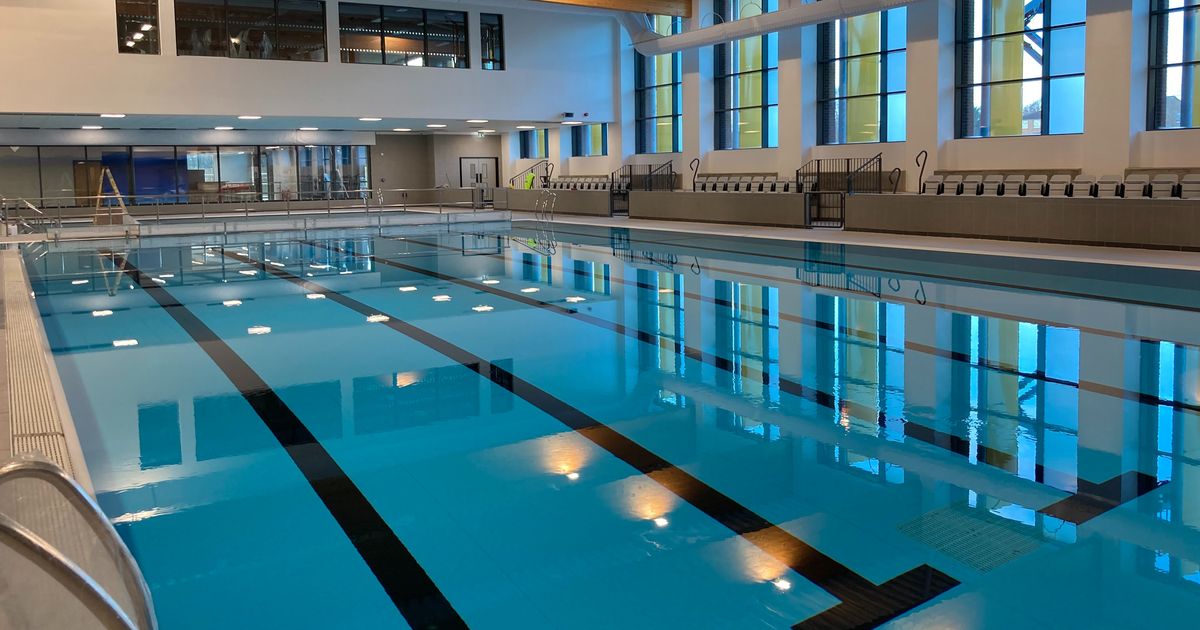
Rushcliffe’s leisure centres, including in Bingham, have operated on a cash-free basis since Covid(Image: Rushcliffe Borough Council)
A Nottinghamshire council has rejected a councillor’s request to guarantee that cash will remain a payment option at the authority’s premises and facilities across the borough.
Independent councillor Ted Birch made the suggestion at a Rushcliffe Borough Council meeting on Thursday, March 5.
He argued that cash is “vital for a liberal democracy” and suggested that the privacy afforded by cash, as opposed to the “digital footprint” associated with online payments, was a “baseline condition of freedom.”
Having cash options would allow for a “fallback” if technology fails, he added, as well as accounting for certain communities and groups that disproportionately use cash more than others.
He added that cash helps avoid the small “transaction fees” attached to many card payments that mean that the vendor does not receive all of the money paid.
Cllr Birch said: “While there is lots of convenience and reasons why people are migrating to primarily digital payment methods, we need to recognise that we have to keep cash alive in any way we can because once it’s gone, it’s not coming back.
“I think we should offer that (cash) provision for our residents in all of our affiliated premises. I think it’s kind, humane and really, really will help the elderly and disadvantaged residents in our borough.”
Rushcliffe has not accepted cash for many services since as long ago as 2011.
From then, those who still want to use cash to pay for services such as council tax have had to do it at a local Post Office or alternative pay points instead of the council’s customer service sites.
Today, cash is still accepted for car parks, at certain council events, and at Rushcliffe Country Park, for example, for smaller transactions such as ice cream vans.
Since the coronavirus pandemic, Rushcliffe’s leisure centres have operated on a cash-free basis.
As part of his suggestion, Cllr Birch also proposed assessing the impact of withdrawing cash payments on equality in the borough before any such move was made, reviewing options for reinstating cash payment options where they have been removed in the last five years, and writing to affiliated partners and contractors to encourage them to continue to accept cash.
But rejecting the idea, Conservative cabinet member for finance Davinder Virdi said: “I recognise that behind this is a genuine concern about fairness, inclusion and ensuring that residents can access council services in ways that work for them. Those principles we would all support.
“However, this does not reflect the way modern councils and businesses must operate in order to deliver services efficiently and responsibly.
“The reality is cash handling is not cost-free. It requires safes, secure storage, increased insurance cover regulation, regular collection arrangements, reconciliation processes and carries a higher risk of fraud as well as theft and effort.”
Cllr Virdi noted that the council was not moving towards a “blanket cashless position”.
He also made the point that equality impact assessments and approval by a specialist committee were already required for decisions that are “significant enough to warrant them” and that partners and contractors make their own decisions on payment options based on “customer usage, operational performance and efficiency.”
He added: “Bank handling charges for coins and cash deposits have also increased significantly in years.
“Guaranteeing universal cash acceptance at every council premises would require additional infrastructure, staff processes and insurance coverage.
“The reality is that cash handling is more expensive, more labour-intensive and slower to process than modern electronic payment systems.
“Whilst there are occasional queries, the vast majority of customers accept and use the system without difficulty.”
He said between 98 and 99% of council tax payments are now paid through direct debit.
Labour councillor Dora Polenta spoke in favour of the idea, saying: “Whenever we make any structural changes, no matter how streamlined, how rational they may appear, we should be asking whose voices have not been heard, who has been left behind and what barriers may have been introduced.
“I do appreciate that sometimes in the future we will move into a fully digitised, avatar-like, cloud economy where maybe material cash would be in the artefacts of history, but we are not at the stage yet.
“Having areas that do not use cash can reduce accessibility and can marginalise and alienate people.”
With the meeting nearing an end, councillors moved to the vote due to a lack of time to further debate.
It was rejected by 24 votes to 16.
[ad_2]
Source link