Millions could get FREE stamps under new plans
[ad_1]
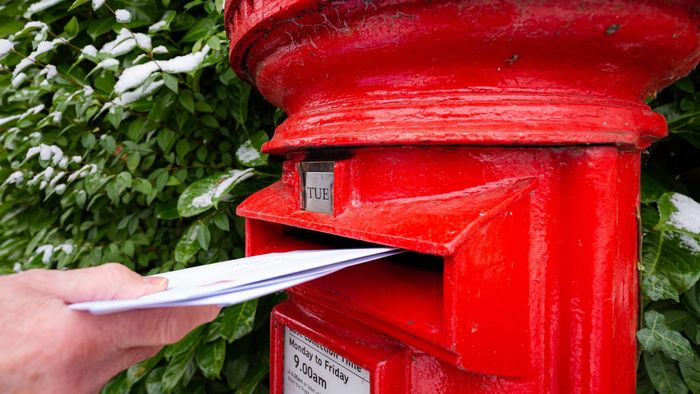
POSTAGE PREMIUMS: But Ofcom’s plan could also mean higher stamp prices for others (Image: Getty)
Millions of people could soon qualify for free or discounted postage stamps under new proposals by the communications regulator Ofcom. The move aims to support households struggling with rising postal costs amid the ongoing cost-of-living crisis.
Over the past four years, the cost of posting letters and parcels has increased significantly across the UK. A single first-class stamp now costs £1.70, while a second-class stamp is priced at 87p.
In response, Ofcom is considering introducing a ‘social tariff’ scheme to help those most affected, particularly people receiving state benefits. Ofcom said: “A targeted discount scheme for vulnerable customers could provide more help to those who face the greatest challenges in affording to send letters.”
READ MORE
The idea mirrors existing telecoms discounts, where those claiming Universal Credit, Pension Credit or other benefits receive cheaper broadband or mobile deals. According to the Daily Record, one option would give eligible customers a set number of free first and second class stamps each year, or offer discounts of up to 50%.
To balance costs, Royal Mail could increase stamp prices for non-eligible customers. Ofcom explained: “Clearly there would be a cost to setting up and running a scheme, which it is anticipated would be borne by Royal Mail and recovered through its prices for people and businesses not eligible for the scheme.”
Stamp prices have nearly doubled since 2021, with first class rising from 85p to £1.70. Second class stamps, though capped until 2027, have also jumped from 66p to 87p.
The rising costs mean most consumers now buy books of stamps, making the expense even higher upfront. Four first-class stamps now cost £6.80, while eight will set you back £13.60.
Ofcom noted that stamp prices have increased globally, citing costs of £2.61 in Italy and £4.55 in Denmark. Despite this, the average Brit still spends only around £2.60 a month on postal services — including parcels.

However, two-thirds of people say they now send fewer letters due to the high prices. The regulator found that vulnerable customers — including benefit claimants, those unable to leave home unassisted, and people with serious medical conditions — are more likely to struggle with postal costs.
Another idea being explored is the introduction of ‘freepost’ addresses for public services such as the NHS or the Department for Work and Pensions. Ofcom stated that this would enable people to send certain letters at no cost, but acknowledged that the approach ‘may be too narrow.’
While Ofcom favours a free or reduced-price postal system for those on benefits, it also acknowledged that benefits “are not a perfect indicator of facing affordability issues”. The regulator is expected to publish its next update by March 2026, setting out whether any of these ideas will move forward.
READ NEXT
[ad_2]
Source link