Related Articles

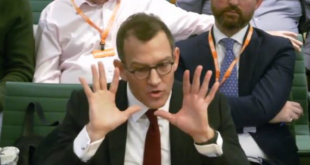

With LGPS Central expanding out of its central England heartland, chief executive Richard Law-Deeks discusses change, Pooling 2.0 and local investment with deputy editor Martin George.
Richard Law-Deeks, chief executive of LGPS Central
When LGPS Central was named pool of the year at the LGC Investment Awards 2025, the judges were clear about their reasons.
They cited its “impressive investment performance, governance maturity, and stewardship innovation,” as well as its “top-quartile returns, strong EDI (equality, diversity and inclusion) and ESG (environmental, social and governance) integration, and ability to demonstrate partnership and collaboration”.
The award, unveiled in November, capped an unexpectedly busy 18 months for Richard Law-Deeks, who joined LGPS Central as its chief executive shortly before the 2024 general election. Labour launched its pensions investment review within a month of being elected, and the pace of change has barely let up since.
Given how “generally, in pensions, things move at quite a slow pace,” Mr Law-Deeks says “what really surprised me was just how quickly everything’s moved”.
A qualified accountant, he joined Central from the Royal Mail Pension Plan, where he served as chief executive, and previous roles included in corporate finance and at Hertfordshire CC and Hackney LBC.
His was one of a number of senior appointments at Central, which “allowed us to really turn things around quite quickly, because if I’m honest, it didn’t feel like we were in a good place as this was happening”.
He adds: “Partner funds weren’t feeling great about the pool. Government didn’t know what we were doing. People didn’t even know that we managed assets internally here. We hadn’t talked about the stuff we’d done on local investment. We just weren’t expressing what we were doing in a coherent way to the right people.”
New partner funds
For him, the timing of the government’s Fit for the Future vision for the future of pooling – published in November 2024 – was fortuitous “because it brought us all together”.
“You had to write this transition plan, and we did it together. It was really painful but we had to get everyone in a room and, almost line for line, work out what we were going to do. And we’re working to deliver that now.
“What came through was a very pragmatic approach. There were things we very quickly worked out, we can’t do it like that, and we had to be really clear with government on that.”
For me, it was about making sure that English devolution map worked
The Fit for the Future agenda moved at pace, and last April ministers shocked many in the LGPS by rejecting the plans of two pools – Access and Brunel – to meet the new minimum requirements for pooling. Their 21 pension funds were told to find a new home.
Of those, six have opted to join Central: Gloucestershire, Hampshire, Norfolk, Oxfordshire, Suffolk and Wiltshire. The Isle of Wight did not submit its preference by the government’s 30 September deadline, but had been expected to do the same.
The new members will increase the value of the assets Central manages to £100bn, and extend its geography out of its original central England heartland into the east, south and south-west.
Mr Law-Deeks cites English devolution and local investment as key considerations in decisions about taking on new funds.
“For me, it was about making sure that English devolution map worked,” he says, with areas on the devolution priority programme that are due to create a combined authority, such as Norfolk and Suffolk, coming together to Central.
With LGPS Central expanding out of central England, will it adopt a new name? Mr Law-Deeks says: “I think we will evolve the brand. I do like ‘Central’ and think it’s a strong name now, but I think we are now central to the LGPS. We’re not about the central region, like the old television channel.”
‘Mixed model’
Fit for the Future marks a decisive moment in the decade-long evolution of the relationship between LGPS pension funds and their pools. Not all of the former have completely welcomed the shift of power to the latter.
Would Mr Law-Deeks say all his partner funds are fully committed poolers? “No,” he replies.
“There’s a range of views across the LGPS. I’ve never described my partner funds as like minded. Some of them really value pooling and find it hugely helpful, because they’re under a huge amount of pressure and we’ve stepped in and really helped on a number of issues.
“There’s some that feel like this has been forced upon them.
“I think what really brought us together was writing that transition plan and hearing all of those views. We have all been through that change curve.”

LGPS Central was named pool of the year at the LGC Investment Awards 2025
Under the Fit for the Future reforms, LGPS funds will remain responsible for setting their high level asset allocations and investment strategy, which the pool will then implement, although funds will be required to take their principal advice about their investment strategy from their pool.
Could this balance shift further towards pools in the future? For Mr Law-Deeks, there could be a voluntary and organic shift for some funds.
“If we deliver on Fit for the Future, and we provide that principal advice, and we build trust, we may get to a point where fund goes ‘here’s my investment objective – go away and deliver it’.
“Some funds will always want to decide on which asset class they go into. So I think, at least for Central, we’ll end up with a mixed model over time.”
Local investment
After last year’s period of competition between the surviving pools to attract new partner funds, he sees a more collaborative relationship between pools going forward.
“It’ll be people going, ‘okay, so we can do that, and you do that, and there’s huge synergies’. I do think there’ll be a lot more collaboration between the pools now. I think we’ve all got things that we’re really good at, that we can share with each other.”
He says the co-investment space is “really exciting” – citing Central’s November’s co-investment in Birmingham Airport with Macquarie Asset Management – and raises the prospect of working with defined contribution funds.
You can’t simply give money away
A key aim of the government’s reforms is to increase the amount the LGPS invests in local areas. Mr Law-Deeks is enthusiastic about local investment, but emphasises the need for the LGPS to be firm about its requirements.
“Local investment does need to deliver returns. You have to be clear about where your fiduciary line is, what return an investment needs to generate, and you can’t really flex on that. You can’t simply give money away.
“That said, there can be a double dividend. If you can identify opportunities that deliver both impact and the required returns – and there are opportunities out there, we’ve found them – then that can be a very positive outcome.”
On concerns that smaller projects can require the same level of due diligence as larger ones, making them less attractive to pools, Mr Law-Deeks adds: “As a large investor, it is often easier to invest at scale. With smaller opportunities, you have to be deliberate about wanting to do that work. You don’t have to do it, but if you do, it needs to be because the opportunity stacks up on its own merits.”
Source link