Why Royal Mail could axe stamps and addresses on letters
[ad_1]
Just like dial-up internet access and cassette tapes, addressing an envelope and then putting a stamp on it could soon become a thing of the past, according to the boss of Royal Mail.
Martin Seidenberg has asked a team of experts to develop an app that could revolutionise the sending of letters and parcels. Customers will type the recipient’s address into the app, which then produces a scannable alphanumeric or barcode for printing out and sticking onto any letter or parcel.
It would signal not only the end of writing your mother’s address onto the envelope of her birthday card but also the demise of the stamp, because payment is taken by the app.
“You don’t need a stamp,” he said. “You can basically buy a combination of numbers that you put on the letter and then post it. So that’s doable.”
The cost of a first-class stamp has doubled in four years to £1.70, which Seidenberg said is “in the median” of overseas postage prices. The European average is between £1.33 and £1.73, according to the Royal Mail.
Asked about the recent price increase, Seidenberg, 52, who is from Cologne, Germany, said the company “had to increase the prices” because Royal Mail had to “go everywhere, every day and deliver the mail”.
Since July, postal workers deliver second-class letters every other weekday, rather than from Monday to Saturday, under changes approved by Ofcom, the industry regulator. The changes are expected to save Royal Mail and its parent company, International Distribution Services (IDS), between £250 million and £425 million a year.
After six months with the company — now owned by investor Daniel Kretinsky, known as the “Czech sphinx”, who bought the 500-year-old institution for £3.6 billion earlier this year — Seidenberg admitted that many people love stamps. Royal Mail produces many special editions every year. The current range includes Snoopy, Harry Potter, Monopoly, steam locomotive and Monty Python-themed sets.
“A stamp is something emotional for the people,” Seidenberg said. “Don’t underestimate [that] … they’re used to having stamps. But also it is always connected with, you know, I made the effort to buy a stamp, I made the effort to basically put it on, for example, a Christmas card.”
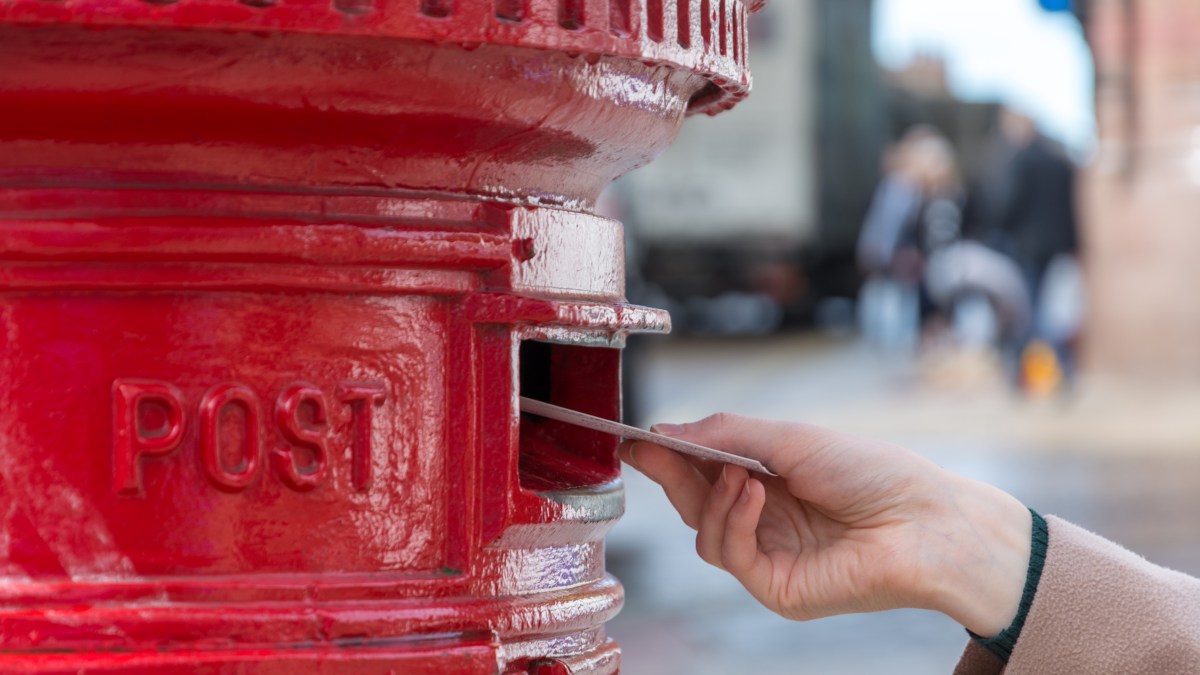
Seidenberg has also poached a top engineer from Williams Racing, the Formula 1 team, to work on revamping Royal Mail’s 115,000 postboxes, the newest of which carry the King’s cypher. The company has already started a programme to convert them into dedicated parcel drop-off points, topped with solar panels and able to scan labels.
• Royal Mail’s new solar-powered postboxes will have parcel slot
Seidenberg wants to expand the company’s 24,000 delivery lockers, parcel drop-off points and converted postboxes to 45,000 sites in five years’ time. Delivery lockers are popular in urban areas, where shoppers have limited access to safe drop-off points and risk falling victim to “porch pirates” — thieves who steal packages from the doorstep.
An expansion into retail is another important avenue being explored. Last month, Royal Mail announced that 8,000 Collect+ convenience stores would be rebranded as Royal Mail Shops after IDS acquired a 49 per cent stake in the business.
Seidenberg said Royal Mail could “pivot to more of the chains like Sainsbury’s and Tesco” and move into petrol forecourts. Kretinsky owns a 10 per cent stake in Sainsbury’s.
Unlike Rico Back, the previous Royal Mail boss who was criticised for commuting from his home in Switzerland, Seidenberg has relocated to the UK and now lives in southwest London. He has picked Fulham as his English football team.
[ad_2]
Source link